

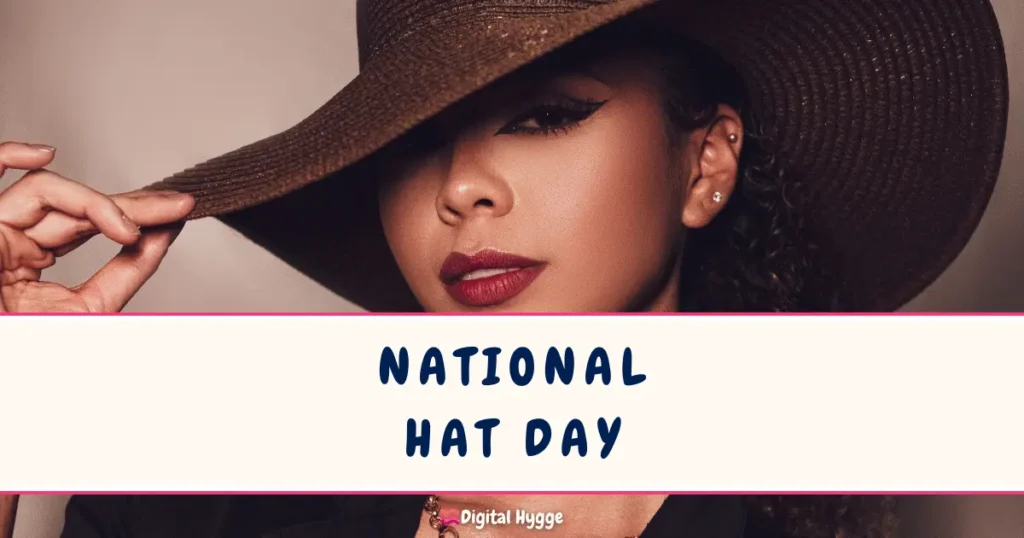

National Hat Day is celebrated every year on January 15 to recognize hats as symbols of identity, profession, protection, and fashion.
Throughout history, hats have signaled occupation, wealth, or social rank while also serving practical purposes such as warmth and sun protection. Today, the observance is often used in schools and community settings to explore historical eras and professions, and it has also become a platform for promoting sun safety and cancer awareness.

🎩👒🧢 This observance is not related to the UK’s Wear a Hat Day in March, which focuses on fundraising for brain tumor research.
The exact founder of National Hat Day is unknown, but the observance has been recognized by schools, libraries, and cultural institutions since at least 1983.
The date is traditionally linked to January 15, 1797, when London haberdasher John Hetherington reportedly appeared in public wearing an early form of the top hat. Contemporary accounts describe the hat as so unusual that it caused public disturbance, highlighting how strongly hats once signaled status and social norms.
When is National Hat Day Celebrated?
National Hat Day is observed each year on January 15, making it a fixed and easy date to remember. The celebration has followed this date for decades, allowing schools, workplaces, and communities to plan activities around it. Below, you’ll find the upcoming dates for National Hat Day in the coming years.
| Year | Date |
|---|---|
| 2026 | January 15, Thursday |
| 2027 | January 15, Friday |
| 2028 | January 15, Saturday |
| 2029 | January 15, Monday |
| 2030 | January 15, Tuesday |

Did You Know? Facts About Hats
Hats are part of everyday life, but many carry stories that go far beyond fashion. Some styles reflect social rules, others solved practical problems, and a few have led to surprising moments in history. These facts show how hats have taken on many roles across cultures and time.
- Oldest hat: The oldest known hat is over 5,000 years old and was found on Ötzi the Iceman, a mummified body discovered in the Alps. He wore a simple cap made from bear fur for warmth.
- World War I impact: During World War I, hats became a symbol of patriotism and solidarity. Women often knitted hats for soldiers as part of the war effort, and many civilian fashion trends were influenced by military headgear.
- The Panama hat: Although it’s called the Panama hat, this iconic style actually originated in Ecuador. Its popularity in the U.S. soared after President Theodore Roosevelt was photographed wearing one while visiting the Panama Canal.
- Hats and superstition: In many cultures, it’s considered bad luck to put a hat on a bed. This belief comes from the idea that hats can carry bad spirits or germs, and placing them on a bed would spread those negative energies.
- The rise of the baseball cap: Originally designed in the 1860s for baseball players to block the sun, the baseball cap is now one of the most popular hat styles in the world, worn by people of all ages for both practical and fashion purposes.
Ways to Celebrate National Hat Day
Celebrating National Hat Day is as simple as putting on your favorite hat and wearing it with pride! But if you’re looking for more creative ways to mark the occasion, here are some ideas:
- Wear your favorite hat: If you have a go-to hat or want to try something new, wear a hat that showcases your style. It could be a classic look, something bold, or even a hat with personal meaning.
- Try a new style: If you’ve always been curious about different hat styles—like berets, flat caps, or cowboy hats—today is a great day to experiment. You might find a new favorite!
- Learn about hat history: Take some time to explore the history of hats and their cultural significance. You could read a book, watch a documentary, or visit a museum with hat collections to deepen your understanding. This video from Gentleman’s Gazette is a great starting point for exploring why men stopped wearing hats, but also helps you understand the history of hats.
- Appreciate the craftsmanship: Learn about how hats are made by checking out videos or articles on millinery (the art of hat-making). Understanding the skill behind crafting hats might give you a newfound appreciation for these stylish accessories.
- Start a hat collection: If you’re a fan of hats, consider starting or expanding your collection. Vintage stores and online shops are full of unique and stylish options. Each hat in your collection can tell a story or represent a different part of history.