


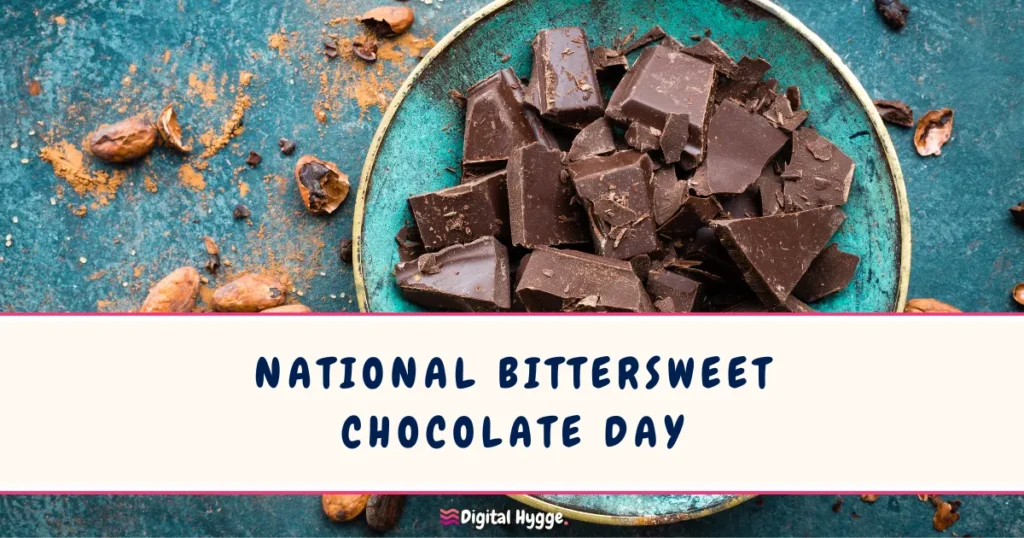

National Bittersweet Chocolate Day is observed annually on January 10 and is a small, largely internet-based observance. Like many modern food holidays, it is used by brands, confectioners, and chocolate enthusiasts to highlight bittersweet chocolate, a type of dark chocolate known for its intense cocoa flavor and relatively low sugar content.
🍫 Did you know there are over 75 chocolate-related days celebrated each year?
Comparison with Other Types of Chocolate
Bittersweet chocolate is a type of dark chocolate valued for its intense cocoa flavor and relatively low sugar content. In the United States, it is a regulated category that must contain at least 35 percent chocolate liquor, the pure paste made from ground cocoa beans.
| Type | Typical Cacao Percentage | Taste Description | Primary Use |
|---|---|---|---|
| Unsweetened | 100% | Extremely bitter | Professional baking |
| Bittersweet | 70%–85% | Deep, rich, lightly sweet | Gourmet baking, refined desserts, beverages |
| Semisweet | 60%–69% | Balanced sweetness | Cookies, muffins, brownies |
| Milk | 10%–45% | Creamy and very sweet | Snacks, children’s treats |
When is National Bittersweet Chocolate Day Celebrated?
National Bittersweet Chocolate Day is observed each year on January 10 and highlights the complex flavor of chocolate with a higher cacao content and lower sugar contents. Below is a table showing when the observance will fall in the coming years.
| Year | Date |
|---|---|
| 2026 | January 10, Saturday |
| 2027 | January 10, Sunday |
| 2028 | January 10, Monday |
| 2029 | January 10, Wednesday |
| 2030 | January 10, Thursday |
Did You Know? Facts About Bittersweet Chocolate
There’s more to bittersweet chocolate than meets the eye! Here are some fun and lesser-known facts:
- Contains fewer additives. Bittersweet chocolate is typically made with cocoa solids, cocoa butter, sugar, and a small amount of emulsifier. It rarely contains milk or flavorings, which keeps the ingredient list shorter than many sweeter chocolates.
- High cacao = more natural compounds. Because it often contains 70 percent cacao or more, bittersweet chocolate is rich in flavonoids and other antioxidants that are linked to cardiovascular support when eaten in moderation.
- Fermentation creates chocolate flavor. Raw cacao beans do not taste like chocolate. A carefully controlled fermentation process, usually lasting five to eight days, is essential for developing the complex flavors associated with bittersweet chocolate.
- Works for sweet and savory dishes. Bittersweet chocolate pairs well with ingredients like sea salt, chili, citrus, and spices. Its natural bitterness helps balance rich or spicy flavors without adding excessive sweetness.
- Performs better in baking. Many bakers prefer bittersweet chocolate for cookies, brownies, and cakes because its lower sugar content allows better control over sweetness and highlights cocoa flavor rather than masking it.
- Stores better than sweeter chocolates. The low moisture content and absence of milk give bittersweet chocolate a longer shelf life when kept cool and dry, compared with milk chocolate.
Ways to Celebrate National Bittersweet Chocolate Day
Looking to make the most of National Bittersweet Chocolate Day? Here are some fun and easy ways to celebrate:
- Bake your favorite bittersweet chocolate dessert: From brownies to cakes, bittersweet chocolate can elevate any recipe. Try your hand at making chocolate mousse, bittersweet truffles, or a decadent flourless chocolate cake.
- Explore new flavor pairings: Bittersweet chocolate pairs beautifully with fruits like raspberries, oranges, and even figs. Experiment with creating your own chocolate and fruit combinations.
- Make a savory dish with chocolate: Bittersweet chocolate isn’t just for desserts! It’s an excellent addition to savory recipes, especially in traditional Mexican mole sauce or even a rich beef stew.
Whatever you choose to do, National Bittersweet Chocolate Day is the perfect excuse to enjoy this delicious treat in all its possible forms!