


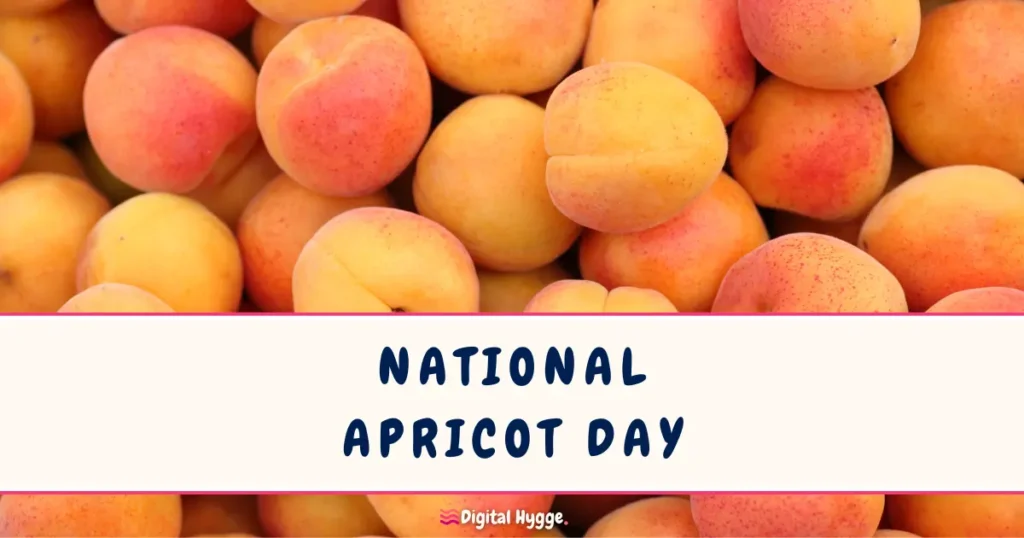

National Apricot Day is observed annually on January 9, offering a mid-winter invitation to enjoy apricots in preserved forms such as frozen, dried fruit, jams, and baked goods. The day draws attention to the apricot’s nutritional value, including vitamins A and C, fiber, and potassium, as well as its long history as a cultivated fruit.
The observance does not have a documented founder and has been recognized in the United States since at least 2003. The January timing is unusual, as fresh apricots are not in season in the Northern Hemisphere during winter.

In contrast, some countries historically marked apricot celebrations closer to harvest time. For example, France once observed an Apricot Day on August 1, aligned with local ripening and harvest time. The reason the U.S. observance settled in January remains unclear.
The day is a relatively small food-focused observance, most often noted by fruit enthusiasts, growers, and online national day calendars. In places where apricots are grown commercially, summer festivals tied to the harvest attract far more attention than the January date.
When Is National Apricot Day Celebrated?
National Apricot Day is observed each year on January 9. The date offers an opportunity to enjoy apricots in their many forms. The table below shows upcoming dates if you want to plan ahead.
| Year | Date |
|---|---|
| 2026 | January 9, Friday |
| 2027 | January 9, Saturday |
| 2028 | January 9, Sunday |
| 2029 | January 9, Monday |
| 2030 | January 9, Wednesday |
Did You Know? Facts About Apricots
Apricots have been around for thousands of years, and their journey from ancient cultivation to modern kitchens is filled with fascinating details. From their name’s unique meaning to the surprising uses of their kernels, these fun facts will give you even more reasons to appreciate apricots.
Origins and History
- Apricots are believed to have been first cultivated in China, before spreading west through the Middle East and into the Mediterranean along ancient trade routes.
- Chinese tradition links apricot trees with learning and wisdom, based on stories that the philosopher Confucius taught his students beneath their branches.
- In Latin, the word praecox means “early ripening,” a reference to how apricots mature earlier than many other summer fruits.
- In Greek mythology, apricots were sometimes associated with the legendary “golden apples” guarded by the Hesperides.
Growing and Production
- In the United States, California produces 95% of apricots grown commercially.
- Turkey is the world’s largest producer of apricots.
- Apricot trees can bear fruit for 20 to 25 years, while the trees themselves may live for more than a century.
- While apricots look much like peaches, they are a distinct species. To extend their short season, they are often crossed with plums to create hybrids like apriums (75% apricot) and plumcots (50% mix).
- Dried apricots are among the most common preserved fruits worldwide, allowing the fruit to be enjoyed year-round despite its brief harvest window.
Botanical and Nutritional Facts
- Apricots belong to the rose family (Rosaceae), making them close relatives of peaches, plums, cherries, and almonds.
- Fresh apricots are made up of roughly 85 percent water, making them nearly as hydrating as watermelon.
- They naturally contain nutrients such as vitamin A, vitamin C, fiber, and potassium.
- Apricots also contain small amounts of tryptophan, an amino acid linked to sleep and mood regulation.
Kernels and Safety
- Inside the hard stone is an apricot kernel that contains amygdalin, a compound sometimes promoted as a health remedy and often falsely marketed as “Vitamin B17”.
- When eaten, the apricot kernel can release cyanide. Eating as few as three small raw kernels can lead to cyanide poisoning in adults, while a single kernel can be dangerous for toddlers.
- Proper cooking or boiling apricot kernels for at least 30 minutes can remove over 90% of the toxin, which is why they are safely used as ingredients in some processed foods like almond biscuits and certain liquors.
How to Celebrate National Apricot Day
Because fresh apricots are rarely available in winter, celebrations tend to focus on preserved forms.
Common ways to observe the day include cooking with dried apricots, baking tarts or cakes, using apricot jam or glaze in savory dishes, or simply enjoying dried apricots as a snack.