


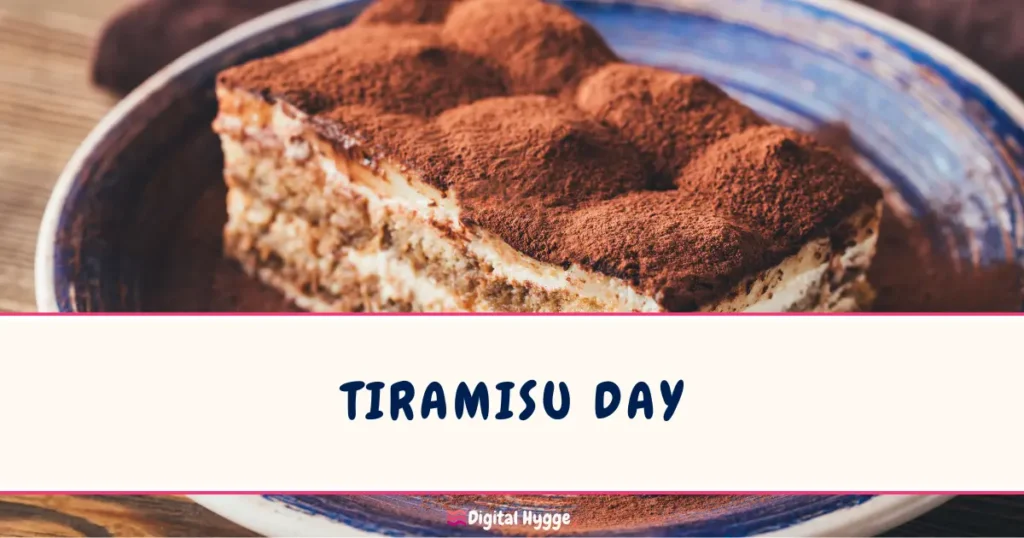

Tiramisu Day, also known as World Tiramisu Day or International Tiramisu Day, is celebrated every year on March 21.
The day was created in 2017 by Italian food writers and journalists Clara and Gigi Padovani, who felt that tiramisù deserved its own moment of recognition. They chose March 21 on purpose, as it marks the beginning of spring. In their words, there is nothing better than tiramisù to celebrate the arrival of the new season and leave the grayness of winter behind.
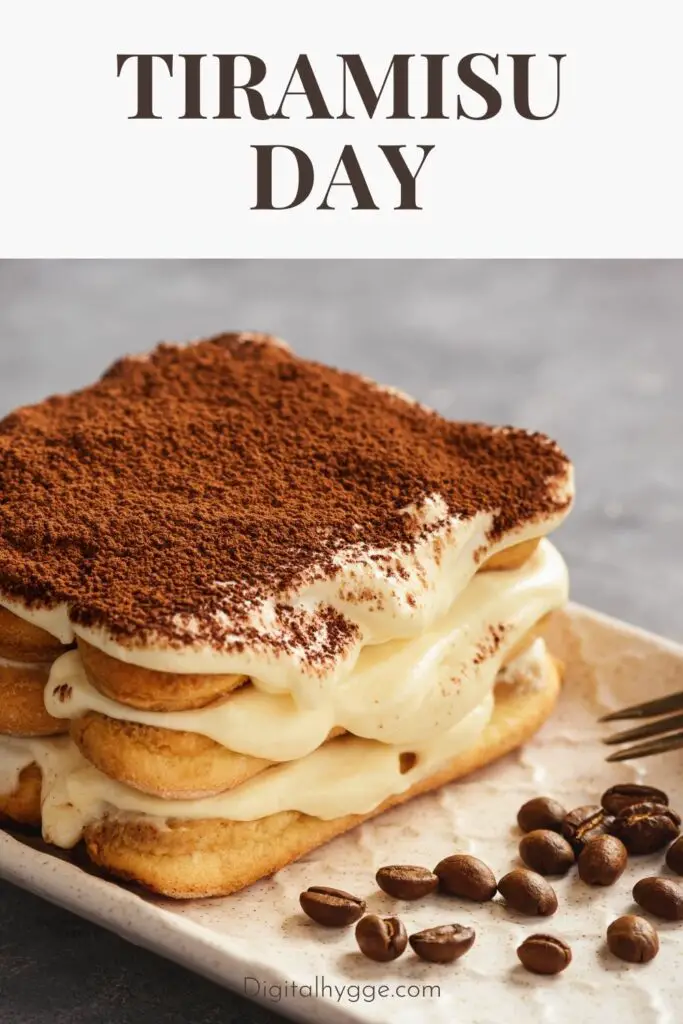
The name tiramisù comes from the Italian phrase tirami sù, which translates to pick me up or lift me up. It is a fitting name for a dessert built on espresso and heavy cream — ingredients that are as energizing as they are indulgent. The name also captures something of the spirit of the day itself, a sweet, optimistic invitation to begin spring on a high note.
What Goes Into
a Tiramisù?
Five ingredients. No baking. One of the most popular desserts ever made.
Strong, freshly brewed coffee that soaks into the ladyfingers, giving tiramisù its signature bitter depth. The quality of the espresso matters — it is the backbone of the whole dessert.
A rich, velvety Italian cream cheese that forms the heart of the filling. It is what gives tiramisù its signature smooth, almost silky texture. No substitute comes close to the real thing.
Whipped together until pale and creamy, they form the zabaglione base that is folded into the mascarpone. This step traces directly back to the sbatudin, the Treviso egg cream that inspired the whole dessert.
Light, dry biscuits that absorb the espresso without falling apart. They provide structure to the dessert’s layers and a gentle sweetness that balances the coffee and cocoa.
Dusted generously over the top, it adds a slightly bitter finish that cuts through the richness of the mascarpone cream. The final touch — and the one you taste first.
☕️ Did you know Tiramisu Day is just one of 25 coffee-related national days celebrated throughout the year? If you’re a coffee lover like me, you’ll want to check out the complete list of coffee-related days I created just for you.
Tiramisù
Did You Know?
Five surprising facts about the world’s most beloved Italian dessert.
According to Roberto Linguanotto himself, the dessert was born when he accidentally spilled mascarpone into a bowl of eggs and sugar he was preparing. Rather than starting over, he tasted the result — and tiramisù was born. He was working at Le Beccherie in Treviso at the time, in late 1969 or early 1970.
Veneto claims it through Le Beccherie in Treviso. Friuli-Venezia Giulia claims it through chef Mario Cosolo, who reportedly made a version called “tirimesù” at his restaurant Al Vetturino in the 1930s. The debate has never been settled — and both regions celebrate it fiercely every March 21.
In 2013, Italian astronaut Luca Parmitano requested tiramisù as part of his menu aboard the International Space Station. Turin chef Davide Scabin created a specially dehydrated version that could be safely enjoyed in zero gravity. It remains one of the most famous dishes ever served beyond Earth’s atmosphere.
According to Guinness World Records, the largest tiramisù ever made weighed 3,015 kilograms and was prepared in Gemona del Friuli, Italy, on May 25, 2015. It measured 50 square meters — roughly the size of a small apartment.
The phrase tirami sù means “pick me up” or “lift me up” in Italian. One persistent legend holds that the dessert was originally served in a Treviso brothel in the 19th century, given to patrons as an energising treat before they returned home to their families. Food historians are skeptical of the story, but it has done nothing to harm the dessert’s reputation.
The Origins of Tiramisù: From Treviso to Global Fame
Tiramisù has its roots in Treviso, a city in northeastern Italy. The dessert evolved from the sbatudin, a simple, energy-rich treat made from egg yolk whipped with sugar that was traditionally given to children, the elderly, and those recovering from illness.
The gastronome Giuseppe Maffioli was among the first to document the connection between this tradition and the modern dessert. Writing in the food and wine magazine Vin Veneto in 1981, he described how the sbatudin had inspired Treviso’s pastry chefs and restaurateurs to create something new.
The result was tiramisù, first made at the Le Beccherie restaurant in Treviso in late 1969 or early 1970 by pastry chef Roberto Linguanotto, who had recently returned from working in Germany. He created it together with the restaurant owner’s wife, Alba Campeol, after a period of experimentation. The dish appeared on the restaurant’s menu in 1972 and quickly spread from Treviso to the wider Veneto region and eventually across all of Italy.
As the Campeol family noted, tiramisù was never about inventing something entirely new. It was about combining familiar, well-loved ingredients in a way that became something timeless.