


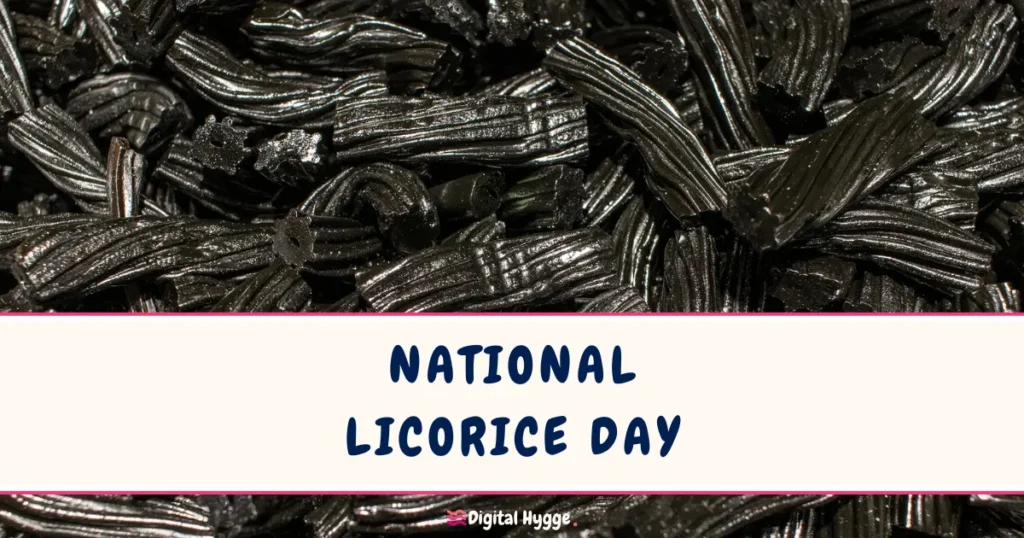

National Licorice Day is observed every year on April 12. It was established in 2004 by Licorice International, a Nebraska-based specialty candy company, in coordination with the National Confectioners Association. Originally created to celebrate black licorice in all its forms, the holiday has since broadened to recognize the history, health benefits, and global love for licorice in all its varieties.
Most people picture the classic black rope when they think of licorice, but Licorice International alone sells more than 160 flavors sourced from 14 countries such as salty Dutch coins, Finnish tar licorice, soft Spanish rounds. The Dutch remain the world’s biggest licorice fans, eating over four pounds per person each year, and the global licorice candy market is now valued at around two billion dollars annually — not bad for a flavor that roughly half the population claims to hate.
The first documented medicinal uses of licorice trace back to ancient Assyrian, Egyptian, Chinese, and Indian cultures, making it one of the oldest known herbal ingredients in the world. When archaeologists opened King Tutankhamun’s tomb in 1922, they found licorice root buried alongside him.
Greek and Roman physicians documented its benefits, helping spread its reputation across Europe, where it gradually shifted from remedy to candies. It became especially popular in the Netherlands and Scandinavia, where both sweet and salty versions are still widely loved today
While real licorice continues to be used for its medicinal qualities, many candies labeled as licorice—especially in the U.S.—contain no licorice root at all, instead using fruity flavors and a similar texture.
Facts About Licorice
- Licorice root has been used for over 4,000 years to treat coughs, sore throats, and digestive issues — long before it became a candy.
- In the Netherlands and Scandinavia, salty licorice is the norm, not the exception. The Dutch eat over four pounds of licorice per person every year.
- Licorice extract shows up in throat lozenges, herbal teas, certain medications, and even some tobacco products, thanks to its natural sweetness.
- Most fruity licorice, including red licorice, contains no actual licorice root. It just borrows the chewy format.
- Black licorice consistently ranks as one of the most divisive candies in the world. You either grew up loving it or actively avoiding the black jelly beans at Easter.
Ways to Celebrate National Licorice Day
National Licorice Day is the perfect time to indulge in this bold and versatile treat. Here are some fun ways to celebrate:
- Try International Varieties: Pick up a variety you’ve never had before like Finnish salmiakki, Dutch drop coins, or a licorice chocolate from a Scandinavian brand.
- Make licorice tea: Brew a cup of licorice root tea. It’s naturally sweet with no added sugar, and genuinely good for digestion.
- Learn Licorice History: Read about licorice’s use in ancient medicine or its evolution into a candy.
- Share the Love: Post photos of your licorice stash or fun licorice facts on social media using hashtags like #NationalLicoriceDay or #LoveLicorice.
World Hamster Day
Celebrating the tiny, chubby-cheeked legend who runs all night long.
National Only Child Day
For those who never had to share the snacks — or the TV remote.
National Grilled Cheese Sandwich Day
Golden, crispy, melty — the sandwich that never lets you down.
Good Deeds Day
A worldwide movement encouraging people to do good — big or small.