


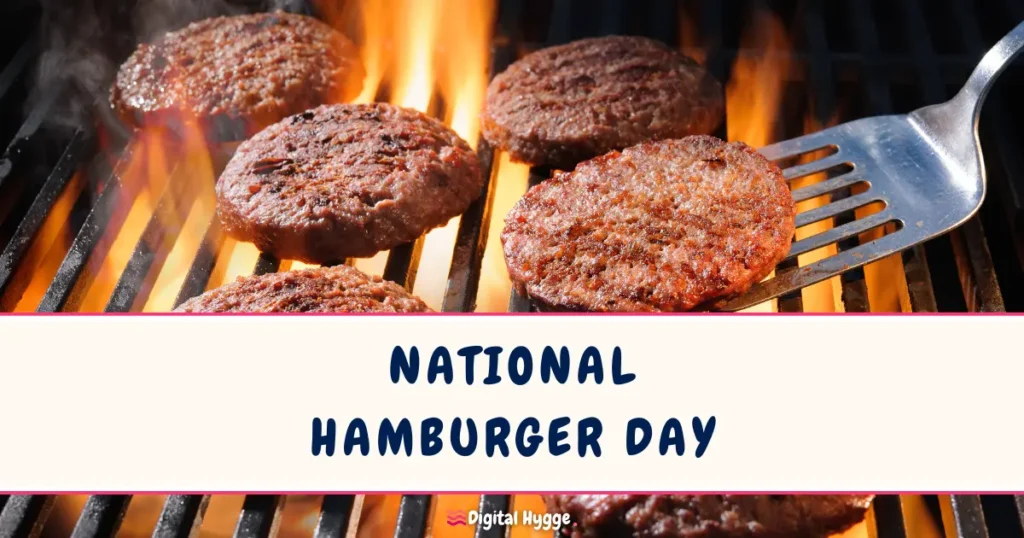

National Hamburger Day is observed on May 28 and highlights the hamburger as a defining part of American food culture. Falling in late May, it aligns with the start of the summer grilling season. The day also reflects the scale of the U.S. hamburger industry, valued at roughly $50 billion a year.
National Hamburger Day is widely recognized by restaurants and food brands, often marked by special promotions, limited-time burgers, and themed menus. The day draws attention to regional burger styles, from smash burgers and thick pub burgers to classic cheeseburgers, while also reflecting how the hamburger adapts to changing tastes through plant-based versions, specialty toppings, and local interpretations.
🍔 Other hamburger days:
When Is National Hamburger Day?
National Hamburger Day is observed every year on May 28. The date is fixed, but the weekday changes, which influences how the day is celebrated from year to year.
| Year | Date | Day of the Week |
|---|---|---|
| 2026 | May 28 | Thursday |
| 2027 | May 28 | Friday |
| 2028 | May 28 | Sunday |
| 2029 | May 28 | Monday |
| 2030 | May 28 | Tuesday |
Because it always falls in late May, National Hamburger Day often lines up with the start of grilling season, outdoor dining, and early summer menus.
Ways to Celebrate National Hamburger Day
National Hamburger Day is easy to celebrate. Here are a few ideas:
- Order a classic burger from a local diner or fast-food spot and stick to the basics: bun, patty, cheese, and simple toppings.
- Grill at home and try a regional style you don’t usually make, such as a smash burger or butter burger.
- Support a local burger place instead of a chain and explore how different kitchens interpret the same simple food.
- Compare burgers by tasting two or three styles side by side, noticing differences in bun, meat texture, and seasoning. Make sure you try something new!
6 National Hamburger Day Facts
The hamburger’s path to becoming an American staple was shaped by small, practical changes rather than a single invention. These fun facts trace how fairs, diners, drive-ins, and regional habits quietly influenced what the hamburger looks like and how it is eaten today.
- Before the Bun: Early American hamburgers were not always sandwiches. Many versions were served as chopped or minced beef patties eaten with a fork, reflecting German-American cooking traditions before the bun-based format became standard.
- A Hand-Held Meal: The hamburger gained popularity at American state fairs in the late 1800s when vendors began adapting the traditional “Hamburg steak” into a form that could be eaten while walking, making it well suited to crowded fairgrounds.
- Standardizing the Hamburger: Founded in 1921, White Castle helped turn the hamburger into a mass-market food by focusing on uniform size, consistent preparation, and low prices, shaping early expectations of fast food.
- The Drive-In Effect: Mid-20th-century American drive-ins shaped burger culture by promoting meals designed to be eaten in cars, influencing burger size, wrapping methods, and the pairing of fries and milkshakes.
- The Cheeseburger: Although its exact origin is debated, most food historians agree the cheeseburger first appeared in the United States during the 1920s or 1930s, where it quickly became a standard item on menus nationwide.
- Regional Burger Styles: Long before national marketing, styles such as smash burgers, butter burgers, green chile burgers, and sliders developed within specific U.S. regions, reflecting local tastes and cooking traditions.