


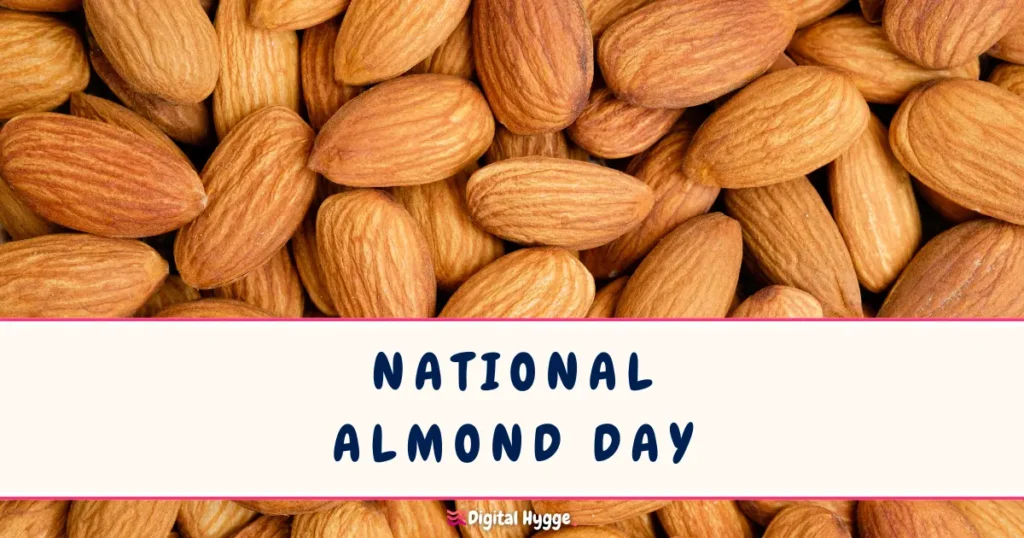

National Almond Day is observed each year on February 16. It recognizes almonds as one of the oldest cultivated foods in human history. Archaeological findings suggest they have been grown for more than 4,000 years, particularly in regions surrounding the Mediterranean.
Almonds are valued for their nutritional qualities. They provide healthy fats, fiber, vitamin E, and plant-based protein, which is why they are often included in heart-conscious and balanced diets.
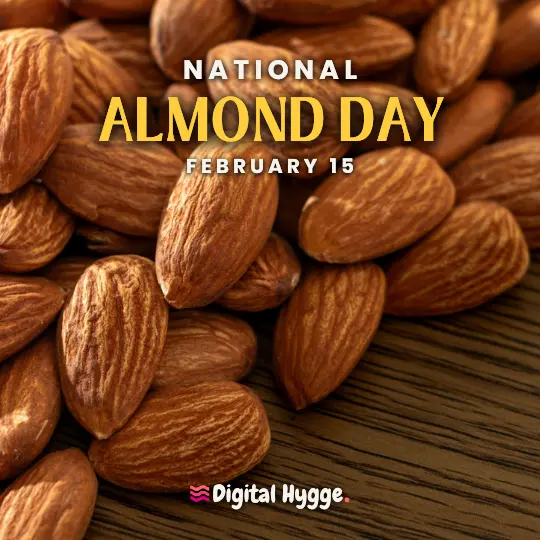
The day also highlights how adaptable almonds are. Almonds are eaten raw or roasted, turned into nut butters and almond milk, milled into flour for baking, and pressed into oil used in cooking and skincare.
ℹ️ Did you know there are several national days dedicated to nuts? Some of the more popular ones are National Cashew Day and Grab Some Nuts Day.
🌰 Surprising Almond Facts
While almost everyone has tasted almonds at some point, there are several lesser-known details that make this nutty snack far more interesting than it first appears.
🌸 Not Technically a Nut
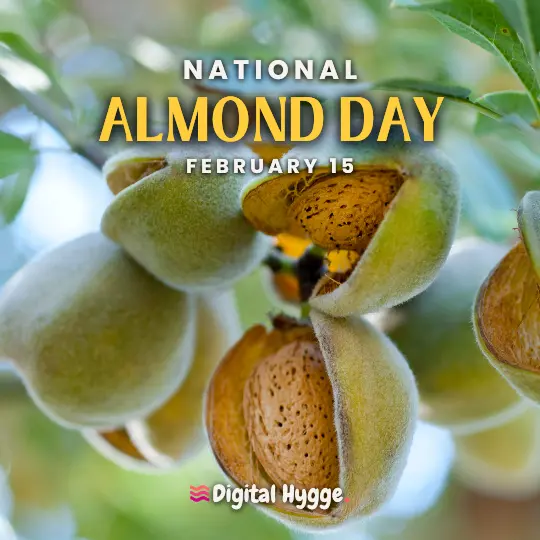
Botanically, an almond is a drupe — a fruit with a fleshy outer layer and a hard shell containing a seed. Almonds are closer relatives of peaches and apricots than of true nuts.
🌹 Part of the Rose Family
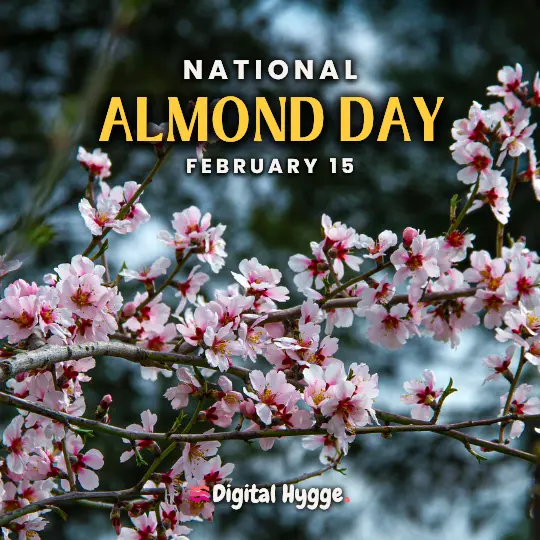
The almond tree (Prunus dulcis) belongs to the Rosaceae family — the same plant family as roses, cherries, and plums. Romans once called them “Greek nuts.”
⚠️ Wild Almonds Were Once Toxic
Early almonds contained amygdalin, a compound that can release cyanide when consumed. A natural mutation thousands of years ago created the sweet varieties we eat today.
🐝 Completely Dependent on Bees
Almond trees are 100% dependent on bee pollination. More than two million beehives are transported each year to orchards — the largest managed pollination event in the world.
🌎 California Leads Production
About 80% of the world’s almonds are grown in California, where the Mediterranean-style climate supports large-scale cultivation.
🌿 Natural Carbon Capturers
A mature almond orchard can store roughly 30 metric tons of CO₂ per acre over its 25-year lifespan. Researchers are exploring how almond shells and hulls can be converted into biochar to improve soil health and reduce agriculture’s footprint.
How People Celebrate National Almond Day
From savoring almond-based treats to experimenting with recipes, National Almond Day offers endless options to enjoy this nutritious nut. Here are a few ideas to bring almonds into your celebration:
- Try Almond-Based Products: Experiment with almond milk, almond butter, or almond flour. You could make homemade almond milk, swap regular flour for almond flour in baking, or spread almond butter on toast or fruit.
- Bake Almond Desserts: Almonds add both texture and depth to desserts. Consider baking almond cookies, a simple almond cake, biscotti, or even French macarons if you want a challenge.
- Snack Smarter: A small handful of almonds makes an easy and convenient snack. You can also mix them with dried fruit, dark chocolate pieces, or other nuts to create your own trail mix.
- Cook a Savory Dish: Add sliced or toasted almonds to salads, stir-fries, rice dishes, or yogurt bowls. They provide crunch and mild sweetness without overpowering other flavors.
- Share and Connect: Prepare a favorite almond-based recipe and share it with friends or online using #NationalAlmondDay. It’s a simple way to exchange ideas and discover new variations.
- Look for Special Offers: Some grocery stores, retailers, or food brands highlight almonds around this date. Check for discounts on whole almonds, almond snacks, or related products if you plan to stock up.
🌰 National Almond Day Upcoming Dates
National Almond Day is celebrated every year on February 16 . The date remains the same each year, while the weekday changes.
| Year | Date | Day |
|---|---|---|
| 2026 | February 16 | Monday |
| 2027 | February 16 | Tuesday |
| 2028 | February 16 | Wednesday |
| 2029 | February 16 | Friday |
| 2030 | February 16 | Saturday |