

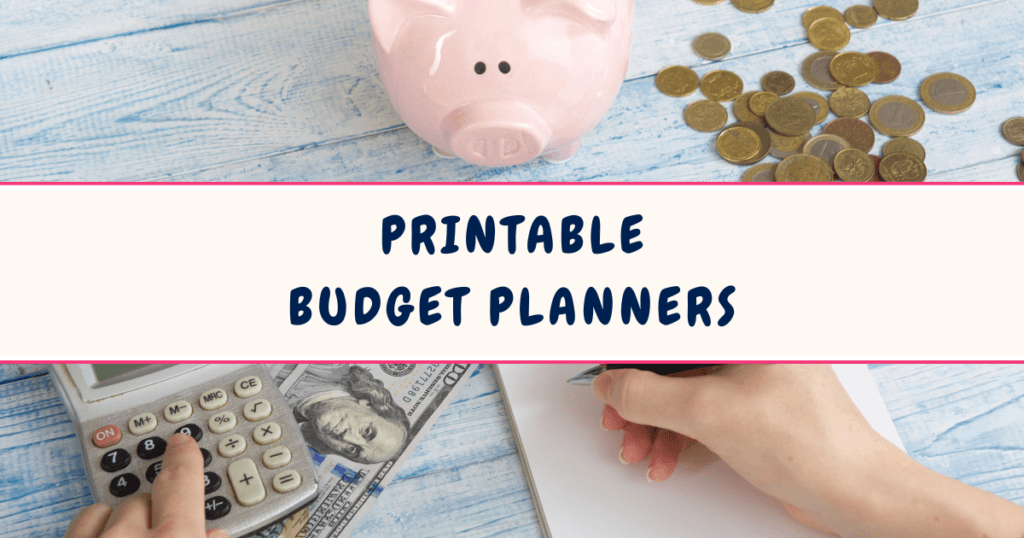

Managing money doesn’t have to feel stressful. With printable budget planners, keeping track of your finances becomes clear and easy. These pages help you organize your income, expenses, and goals so you can stay in control and see your progress month after month.
I’m so happy to share eight beautifully designed budget worksheets that you can download for free. And that’s just the beginning—I’m already working on more designs to make budgeting even simpler and prettier. Make sure to subscribe to my newsletter so you’ll be the first to know when new printables are released!
Curious to explore more? I have hundreds of free printables on DigitalHygge, including money-saving challenges, health challenges, Year in Pixels trackers, and so much more!
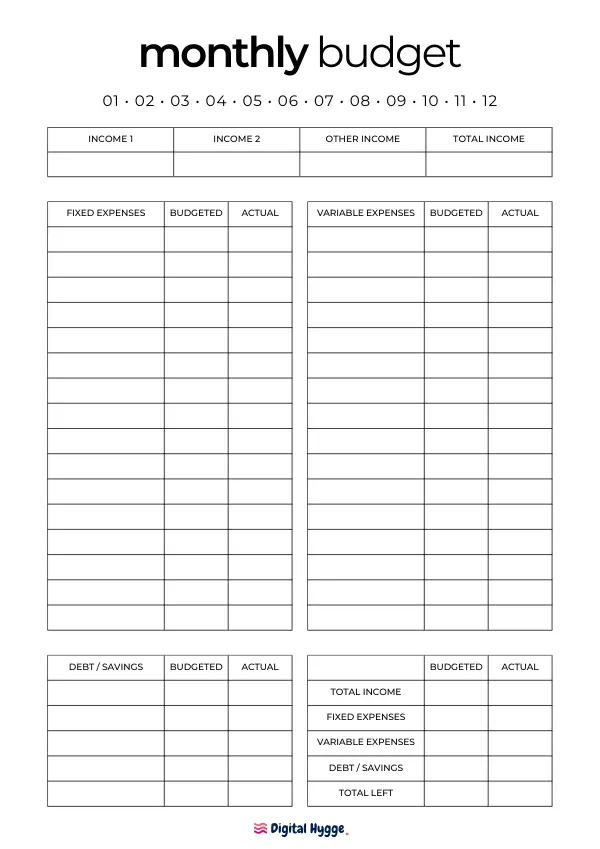
Clean and Modern Monthly Budget Planners
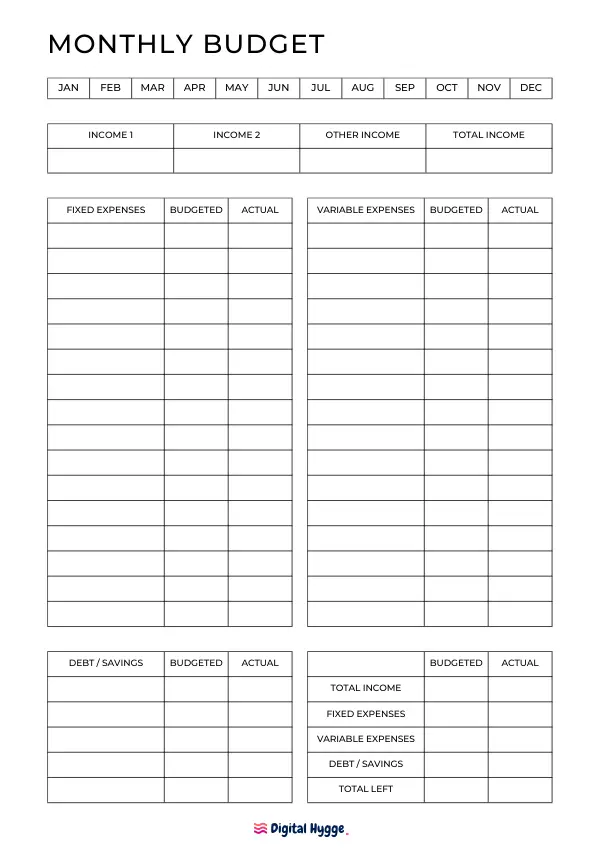
Stay organized with these minimalist budget planner pages. Each sheet has clear sections for income, expenses, and totals—making budgeting simple and stress-free. Choose between a bold modern layout or a clean, classic design.
Download: A4 size | Letter size
Download: A4 size | Letter size
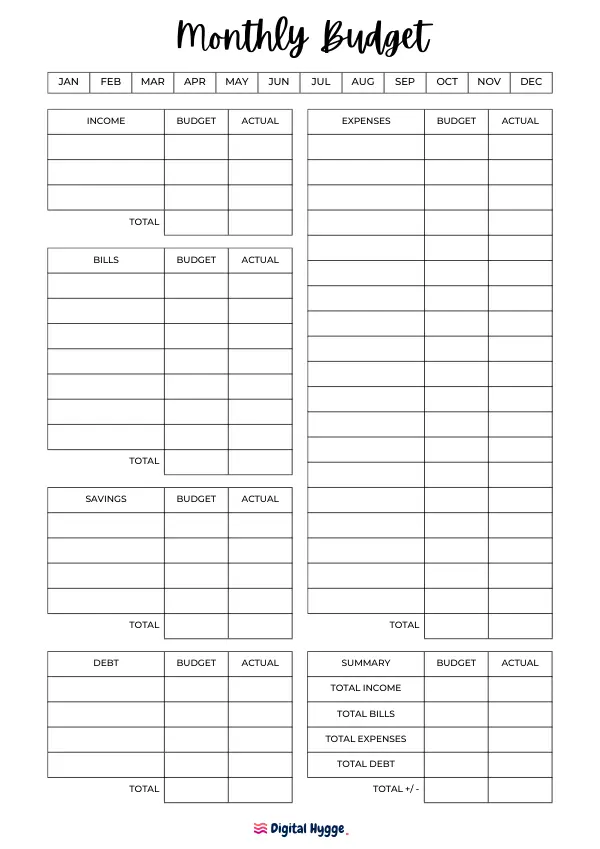
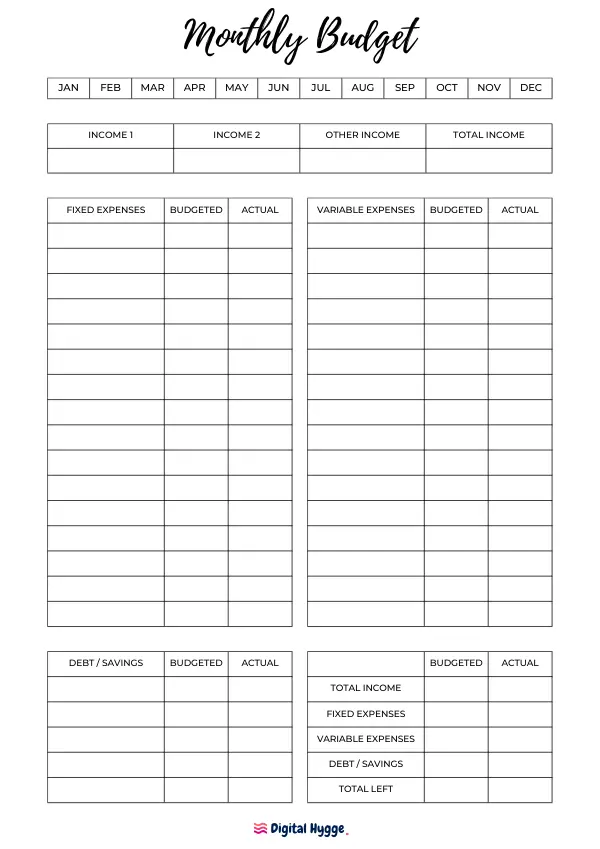
Elegant Printable Budget Planners
Add a touch of personality to your budgeting with these stylish brush-font planners. Choose between a layout with extra space for detailed tracking or a compact version for quick budgeting.
Download: A4 size | Letter size
Download: A4 size | Letter size
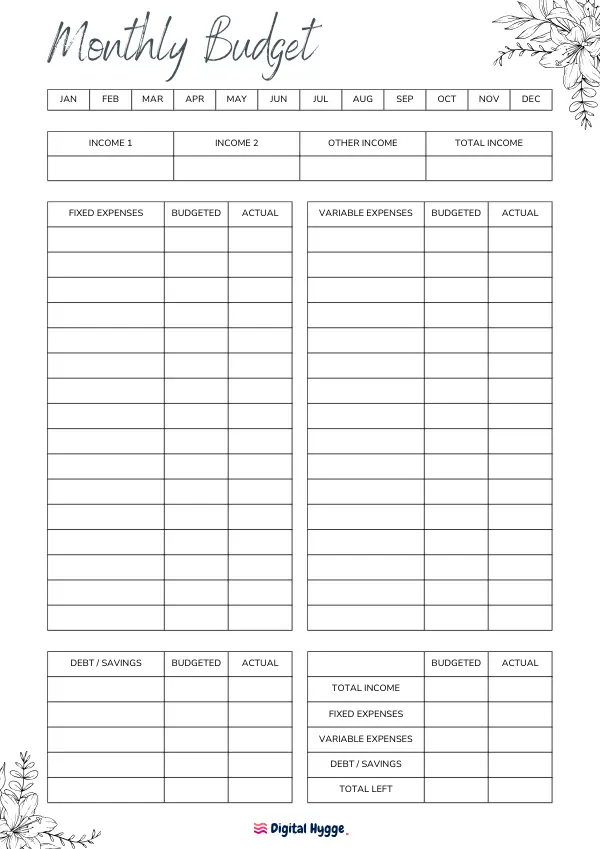
Floral Monthly Budget Printables
These two floral budget worksheets match the style of my popular no-sugar challenges and savings challenges. After seeing how much readers loved those designs, I decided to create matching budget planners too!
One features soft, subtle floral accents, while the other stands out with bold, vibrant botanicals—perfect for anyone who likes mixing creativity with practical planning.
Download: A4 size | Letter size
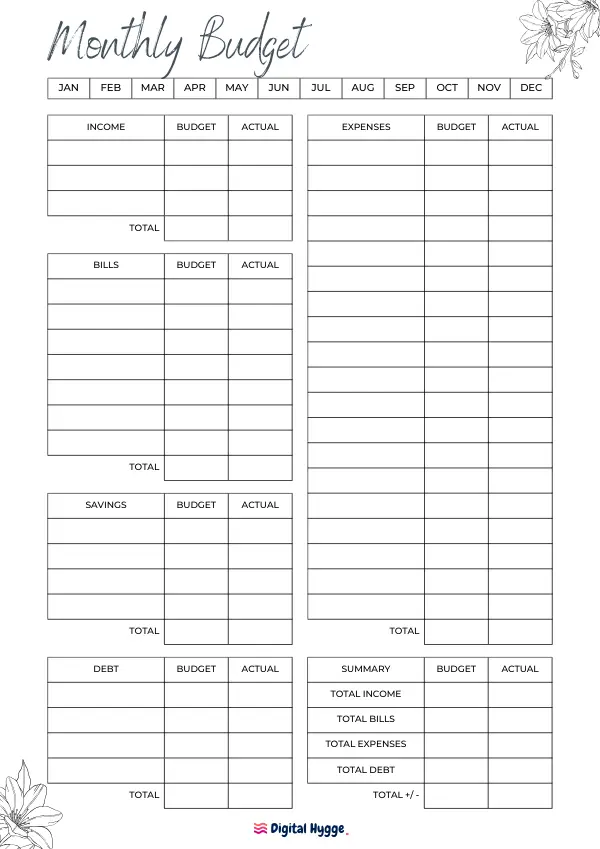
Download: A4 size | Letter size
Monthly Budget Planner – Simple and Functional
Stay on top of your finances with this beautifully designed budget planner. Choose between two styles—one with a “Budgeted” column for setting spending goals, and another with a clean, simplified layout.
Each comes in two formats: pre-filled categories for quick setup or blank sections for full customization. Designed for both A4 and US Letter sizes, it’s ready to print and use right away.
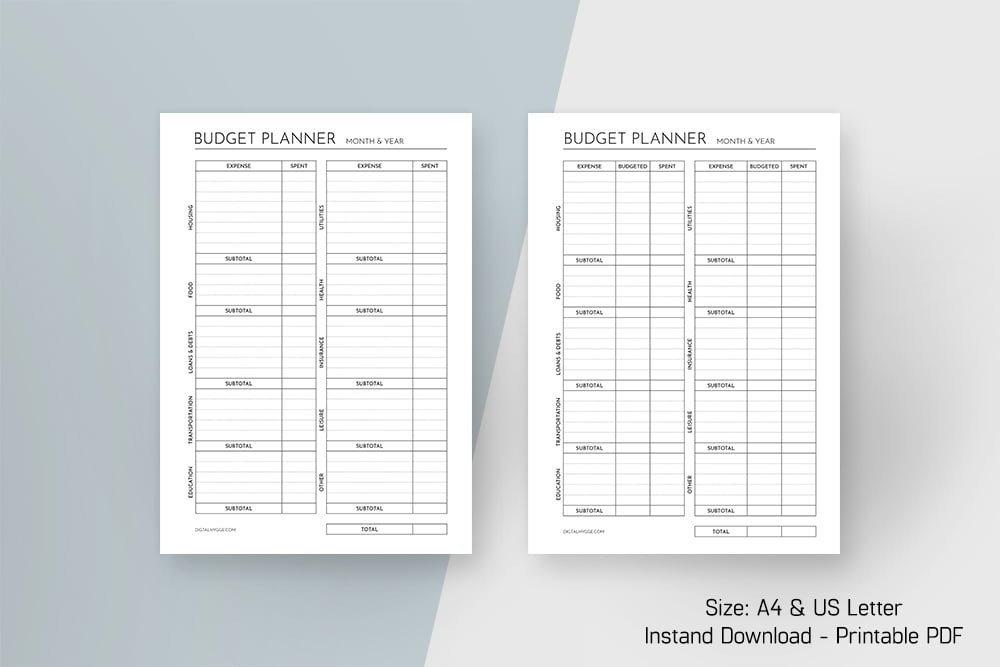
Both styles have two additional options: pre-filled categories and empty categories.
Download: A4 size | Letter (8.5 x 11 in)
Monthly Budget on Two Pages – Double the Space, Double the Clarity
Plan your monthly finances with this two-page budget layout, ideal for anyone who likes extra space to stay organized. With clear sections for “Budgeted” and “Actual” amounts, it helps you track spending across categories at a glance.
Available in A4 and US Letter sizes, this planner makes budgeting simple and enjoyable—just print and start planning.
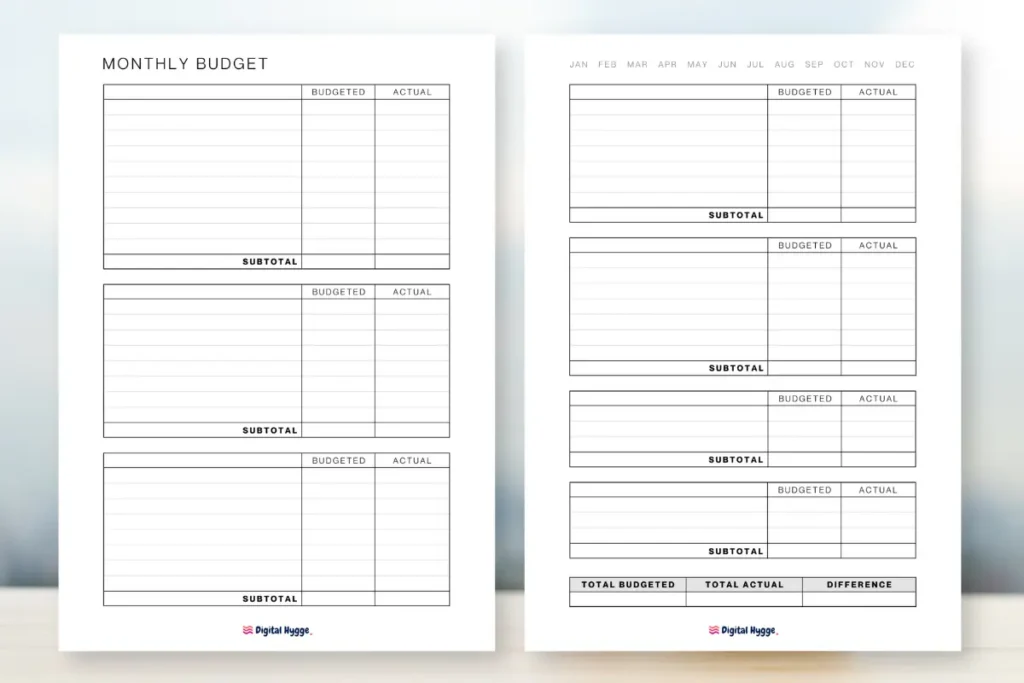
Download: A4 Size | US Letter
How to Use the Monthly Budget Planner
Below I will share a few tips for you to help you get the most out of your budget planner.
Income
Understanding where your money comes from is the foundation of budgeting. Track all sources of income to see your full financial picture.
- Primary Income: Regular salary or wages after taxes.
- Side Hustles: Earnings from freelance work, part-time jobs, or gig platforms.
- Other Income: Include dividends, rental income, bonuses, or any other irregular sources.
Fixed Expenses
These are recurring costs that typically remain the same each month. Knowing these helps you allocate your budget efficiently.
- Housing: Rent or mortgage payments, property taxes, repairs, maintenance, and homeowner’s insurance.
- Utilities: Electricity, water, internet, phone bills, and waste services.
- Loans/Debts: Payments for student loans, car loans, credit cards, and personal loans.
- Insurance: Health, life, car, house, pet, and travel insurance.
Variable Expenses
These fluctuate monthly and can often be adjusted to save money.
- Groceries and Dining: Food at home, dining out, takeout, and meal delivery services.
- Transportation: Gas, public transit passes, parking, tolls, ride-shares, and car repairs.
- Entertainment: Streaming services, hobbies, recreational activities, and events.
- Health: Medications, doctor’s visits, gym memberships, therapy, and fitness equipment.
- Personal Care: Haircuts, spa treatments, skincare, and cosmetics.
- Leisure: Traveling, seasonal activities, and hobby equipment.
Savings and Investments
Building savings is essential for emergencies and long-term goals. Track contributions and prioritize your future financial health.
- Emergency Fund: Allocate money for unexpected expenses like car repairs or medical bills.
- Retirement Savings: Contributions to a 401(k), IRA, or other retirement plans.
- Education Savings: Set aside funds for tuition, courses, or professional certifications.
Goals and Priorities
These are expenditures tied to your personal aspirations. Plan short-term and long-term goals to stay motivated.
- Short-Term Goals: Save for vacations, gifts, or a new gadget.
- Long-Term Goals: Plan for big-ticket items like a home, car, or significant renovations.
Tracking Tips
Staying consistent with tracking is key to successful budgeting. Use these strategies to stay on top of your finances.
- Keep Receipts: Use them to cross-check your expenses.
- Set Categories: Divide expenses into “needs,” “wants,” and “savings” for clarity.
- Revisit Monthly: Adjust your budget based on the previous month’s performance.
- Use Tools: Pair printables with apps for tracking expenses or calculating totals.
I hope you love using my budget trackers as much as I enjoyed creating them for you! I’d be thrilled if you left a comment or shared this post with your friends—it means so much to me.
Happy budgeting! 😊
Other Resources You Might Like: