


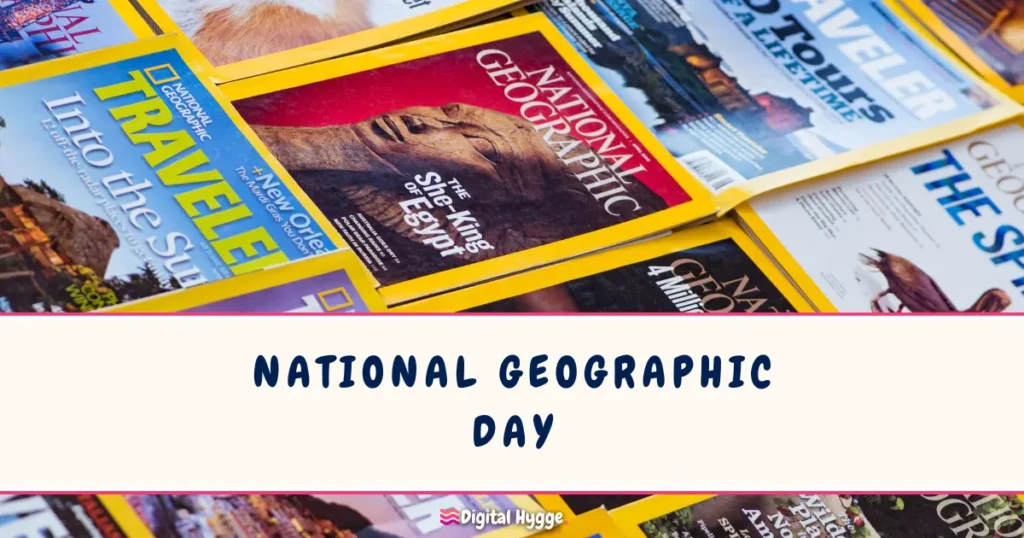

National Geographic Day is celebrated annually on January 27. In 2026, the observance honors 138 years since the founding of the National Geographic Society, an organization that has shaped public understanding of the planet, its cultures, and its natural environments.
The day is widely recognized by schools, libraries, and environmental organizations, and is observed worldwide by readers and explorers who share their favorite stories and photos using the hashtag #NationalGeographicDay.
History and Foundation
The National Geographic Society was founded on January 27, 1888, when 33 geographers, explorers, scientists, and educators gathered at the Cosmos Club in Washington, D.C. Their goal was to promote the increase and spread of geographical knowledge at a time when large parts of the world were still poorly mapped and documented.
Nine months later, in October 1888, the first issue of National Geographic magazine was published. It started as a publication for scientists and explorers, but over time it became a widely read illustrated magazine, known for its photography and in-depth reporting, and one of the most recognized monthly publications in the world.
When Is National Geographic Day?
National Geographic Day is observed each year on January 27. The date marks the signing of the formal certificate of incorporation of the National Geographic Society in 1888.
| Year | Date | Day of the Week |
|---|---|---|
| 2026 | January 27 | Tuesday |
| 2027 | January 27 | Wednesday |
| 2028 | January 27 | Thursday |
| 2029 | January 27 | Saturday |
| 2030 | January 27 | Sunday |
History of National Geographic
The National Geographic Society was founded in 1888 in Washington, D.C. by 33 scientists, explorers, geographers, and educators. Among them was Gardiner Greene Hubbard, a lawyer and philanthropist who became the Society’s first president. Their shared goal was straightforward: to increase and spread geographic knowledge at a time when large parts of the world were still unfamiliar to the general public.
In 1896, the Society appointed Alexander Graham Bell as its second president. During his leadership, National Geographic began moving away from dense technical writing and toward articles written for everyday readers. This shift helped shape a new style that combined science, exploration, and storytelling in an accessible way.
A major change followed in the early 20th century, when National Geographic became a pioneer in using photography as a primary storytelling tool. By the 1910s, photo essays were central to the magazine, allowing readers to visually experience distant landscapes, wildlife, and cultures. This approach played a key role in shaping modern photojournalism.
In the modern era, National Geographic functions as both a media organization and a scientific institution. It has funded over 14,000 research and exploration projects worldwide and supports active explorers working in fields such as climate science, archaeology, marine biology, and anthropology. Its content now reaches global audiences through print, television, film, education, and digital platforms, published in more than 40 languages and distributed in over 170 countries.
Ways to Observe National Geographic Day
National Geographic Day works best as a learning-focused observance that invites curiosity and exploration.
- Read a National Geographic article or explore an archived magazine issue
- Watch a documentary from National Geographic Channel
- Explore maps or interactive features related to geography or wildlife
- Learn about a culture or ecosystem you are unfamiliar with
- Share a photo, fact, or favorite story online using #NationalGeographicDay
Featured image: ©Elnur_ /DepositPhotos.com