

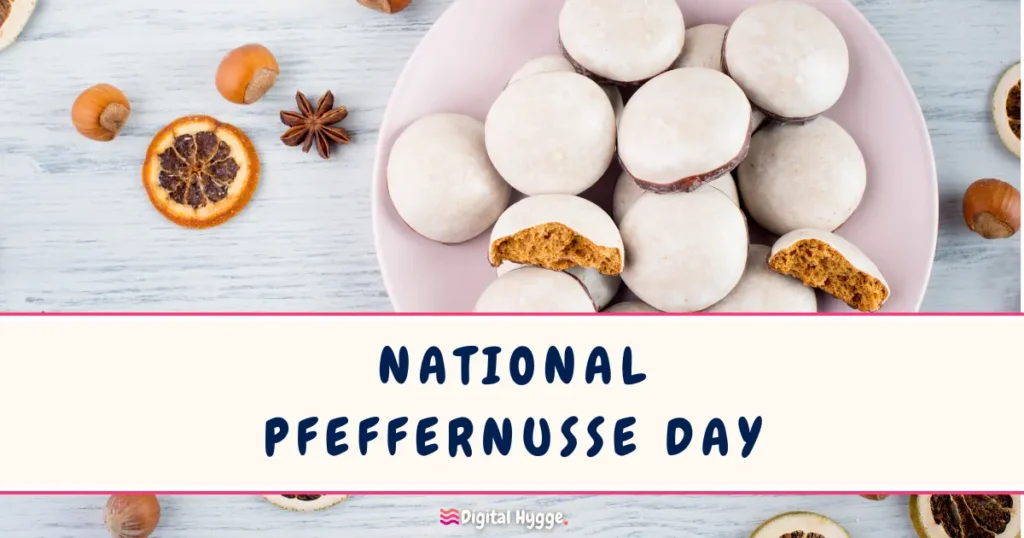

National Pfeffernüsse Day is observed annually on December 23 and highlights a traditional spiced cookie closely linked to European Christmas baking. Pfeffernüsse, also known as “peppernuts,” are small, round cookies flavored with cinnamon, cloves, nutmeg, cardamom, and a touch of black pepper. They are most commonly associated with holiday traditions in Germany, the Netherlands, and Denmark.
The name comes from the German words Pfeffer (pepper) and Nüsse (nuts). Despite the name, most modern recipes do not contain nuts; it refers instead to the cookie’s small, nut-like shape. Historically, “pepper” was used as a general term for imported spices, though many recipes still include a small amount of black or white pepper. Some variations add citrus zest, molasses, or brandy, and the cookies are often dusted with powdered sugar or lightly glazed.
The earliest recorded recipe is credited to Johann Fleischmann, who developed the cookies in 1753 in Offenbach am Main. By the 19th century, Pfeffernüsse were firmly established as part of Christmas traditions across Central and Northern Europe.
As European communities migrated, the tradition spread to North America, particularly among German and Dutch families. In some Mennonite communities, baking peppernuts remains a seasonal custom passed down through generations, while in parts of Europe the cookies are still linked to St. Nicholas traditions.
When Is National Pfeffernusse Day Celebrated?
National Pfeffernüsse Day is celebrated each year on December 23. Observed just before Christmas, the day highlights traditional spiced cookies commonly baked during the holiday season in some parts of Europe.
| Year | Date |
|---|---|
| 2025 | December 23, Tuesday |
| 2026 | December 23, Wednesday |
| 2027 | December 23, Thursday |
| 2028 | December 23, Saturday |
| 2029 | December 23, Sunday |
| 2030 | December 23, Monday |
Five Facts About Pfeffernüsse
These traditional spiced cookies have been part of European winter baking for generations. Their name, ingredients, and customs reflect how food traditions develop and travel across regions over time.
Here are 5 facts about Pfeffernüsse:
- Not actually nuts. Despite the name “peppernuts,” Pfeffernüsse usually contain no nuts. The name refers to their small, nut-like size and the use of pepper in the spice mix.
- An 18th-century recipe. The earliest recorded Pfeffernüsse recipe dates to 1753, placing the cookies firmly in early modern European baking history.
- Defined by spices. Pfeffernüsse are known for their mix of cinnamon, cloves, nutmeg, cardamom, and a small amount of pepper, which gives them a warm, slightly sharp flavor.
- Popular across Northern Europe. While closely associated with Germany, Pfeffernüsse are also common in the Netherlands and Denmark, with regional variations in sweetness and spice balance.
- Perfect for Gifting. These cookies keep well and often taste better after resting for several days, making them practical for gifting and holiday preparation.
Ways to Celebrate National Pfeffernusse Day
National Pfeffernüsse Day is an opportunity to enjoy a traditional holiday cookie, whether by baking it yourself or learning more about its background. A few simple ways to observe the day include:
- Bake a batch at home: Use a classic recipe to experience the familiar mix of warm spices and powdered sugar.
- Share them with others: Pfeffernüsse keep well and are easy to gift, making them suitable for sharing with family or friends.
- Explore their background: Look into how these cookies developed across different European regions and how recipes vary by tradition.