


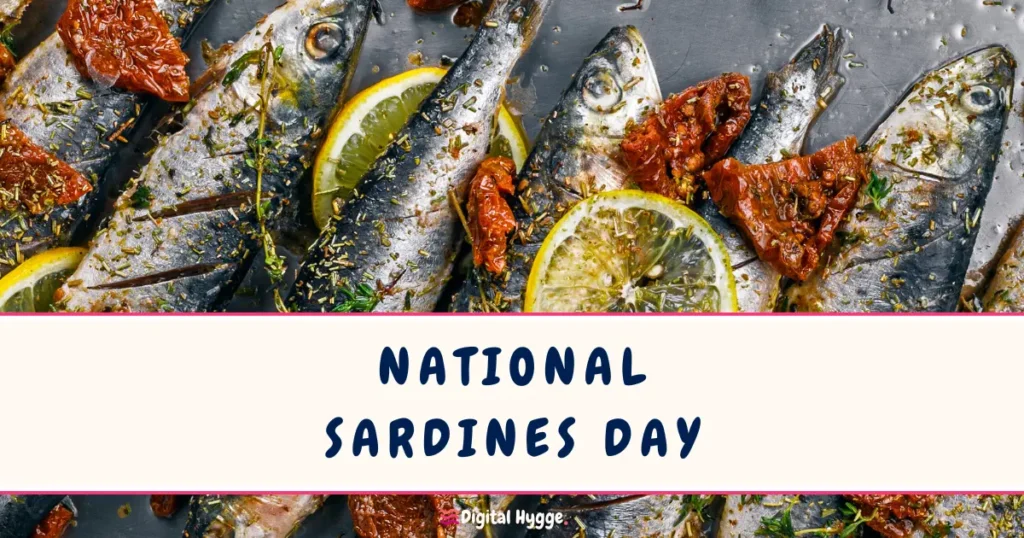

National Sardines Day, observed on November 24, draws attention to sardines as a simple, affordable, and nutrient-dense food. The day encourages people to see this small fish not just as something in a tin, but as a useful ingredient for quick, healthy meals.
Sardines are small oily fish from the herring family, named after the island of Sardinia where they were once especially common. They are sold fresh, canned in oil, water, or tomato sauce, smoked, or pickled. In many cuisines, sardines appear on toast, in salads and pasta dishes, or grilled whole as street food and family-style meals.

Nutritionally, sardines offer a concentrated package of protein, omega-3 fatty acids, vitamin D, vitamin B12, calcium, phosphorus, and selenium. Because they feed low in the marine food chain, they tend to carry lower levels of mercury and other contaminants than many larger fish. For people who do not eat much dairy or who live in places with long, dark winters, sardines can help support bone health and brain function through their combination of vitamin D, calcium, and healthy fats.
When Is National Sardines Day Celebrated?
National Sardines Day is celebrated every year on November 24. The table below shows the exact weekday and date for each year through 2030, helping you plan content, updates, and seasonal posts with ease.
| Year | Date |
|---|---|
| 2025 | November 24, Monday |
| 2026 | November 24, Tuesday |
| 2027 | November 24, Wednesday |
| 2028 | November 24, Friday |
| 2029 | November 24, Saturday |
| 2030 | November 24, Sunday |
10 Facts About Sardines for National Sardines Day
Sardines may look humble, but their story stretches across oceans, kitchens, and entire coastal cultures. They support marine ecosystems, fuel nutrient-rich meals, and have shaped traditions from Portugal to South Africa.
The facts below highlight how this small fish earned a lasting place in food history and why it still matters today—from sustainability and nutrition to culture and everyday cooking.
- Sardines help keep marine ecosystems stable. Large predators such as tuna, cod, seabirds, and marine mammals depend on sardines as a major food source. Their abundance helps balance entire ocean regions.
- They are among the most sustainable seafood options. Because sardines grow quickly and reproduce often, they recover faster from fishing pressure than many larger species. Their low position in the food chain also means harvesting them requires fewer resources.
- Sardines hold a strong place in Portuguese culture. Portugal’s summer festivals often feature freshly grilled sardines served with bread and peppers. Lisbon’s annual Santo António festivities are especially known for sardine stalls lining the streets.
- They have a richer nutrient profile than many people expect. A single serving offers omega-3 fats, vitamin D, vitamin B12, calcium, selenium, and high-quality protein. The edible bones contribute significantly to their calcium content.
- Sardines accumulate fewer contaminants than larger fish. Their short lifespan and plant-based diet keep mercury levels low, which makes them a practical seafood choice for frequent consumption.
- The modern sardine industry grew out of 19th-century food innovation. Canning techniques developed in Europe and the United States turned sardines into an affordable, long-lasting food. Millions of cans were produced annually during both World Wars due to their portability and high nutrient density.
- Vintage sardine labels are now collectible items. Early cans featured colorful, illustrated labels that reflected coastal identity and local pride. These designs are now sought after by collectors and often appear in museum exhibits on maritime history.
- Sardines appear in unexpected dishes across different cuisines. Beyond the usual toast or pasta, cooks use them in stuffed vegetables, rice dishes, savory pies, and flatbreads. Their bold flavor stands up well to citrus, herbs, tomatoes, and chili.
- “Sardine run” events draw scientists and tourists alike. Every year, South Africa’s coast experiences a massive migration of sardines that attracts dolphins, sharks, and seabirds. Researchers study the run to better understand ocean conditions and fish population cycles.
- The word “sardine” is not tied to a single species. It refers to several closely related small fish in the herring family. What is labeled as “sardines” varies by region, which explains differences in size, flavor, and texture across brands.