


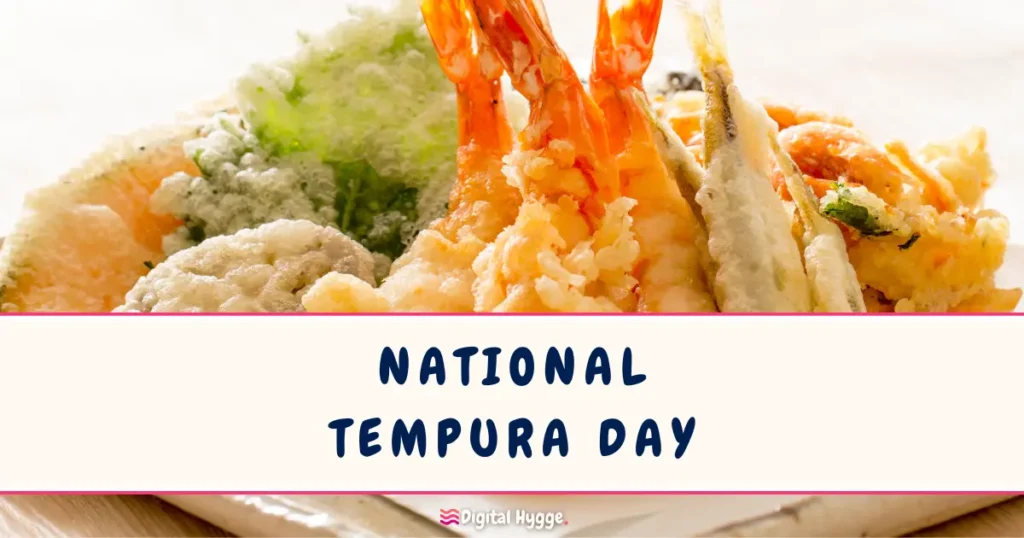

National Tempura Day is celebrated each year on January 7. The day recognizes tempura, a Japanese frying technique known for its very light, crisp coating, most often used for seafood and vegetables. Unlike heavier fried foods, the batter is thin and delicate, designed to enhance the ingredient rather than cover it.
The observance began gaining recognition in the early 2000s, alongside growing international interest in Japanese food culture.
A Portuguese Influence or How Japan Made Tempura Its Own
Though now recognized as a classic Japanese dish, tempura has roots outside Japan. The technique arrived in the mid-16th century, around 1549, when Portuguese missionaries and traders entered Japan through the port of Nagasaki. They brought Western frying methods, including battering foods before cooking them in oil. One likely influence was peixinhos da horta, a Portuguese dish of battered and fried green beans that resembled small fish.
The name “tempura” is often linked to the Latin word tempora, part of the phrase ad tempora quadragesimae, referring to periods of fasting such as Lent and other Catholic Ember Days. During these times, meat was avoided, and fish or vegetables were prepared instead. In Japan, the word was adopted as the name of the dish.
Japanese cooks gradually transformed the imported technique. Early versions used small, chopped ingredients, but over time chefs began frying whole pieces of seafood and vegetables. The batter became lighter, the oil cleaner, and the emphasis shifted to highlighting the ingredient’s natural flavor and texture rather than covering it.
By the 17th century, tempura had become popular street food, sold from stalls and valued for its quick preparation and clean, balanced flavor.
When Is National Tempura Day Celebrated?
National Tempura Day is observed each year on January 7. The date falls in mid-winter, when warm, freshly fried foods feel especially appealing. The table below shows upcoming dates so you can easily plan a meal at home or a visit to a Japanese restaurant.
| Year | Date |
|---|---|
| 2026 | January 7, Wednesday |
| 2027 | January 7, Thursday |
| 2028 | January 7, Friday |
| 2029 | January 7, Sunday |
| 2030 | January 7, Monday |
Did You Know? Facts About Tempura
There is much to learn about tempura. Its history, cooking method, and cultural role show how the dish was shaped by foreign influence, careful technique, and centuries of refinement.
Common Ingredients and Modern Variations
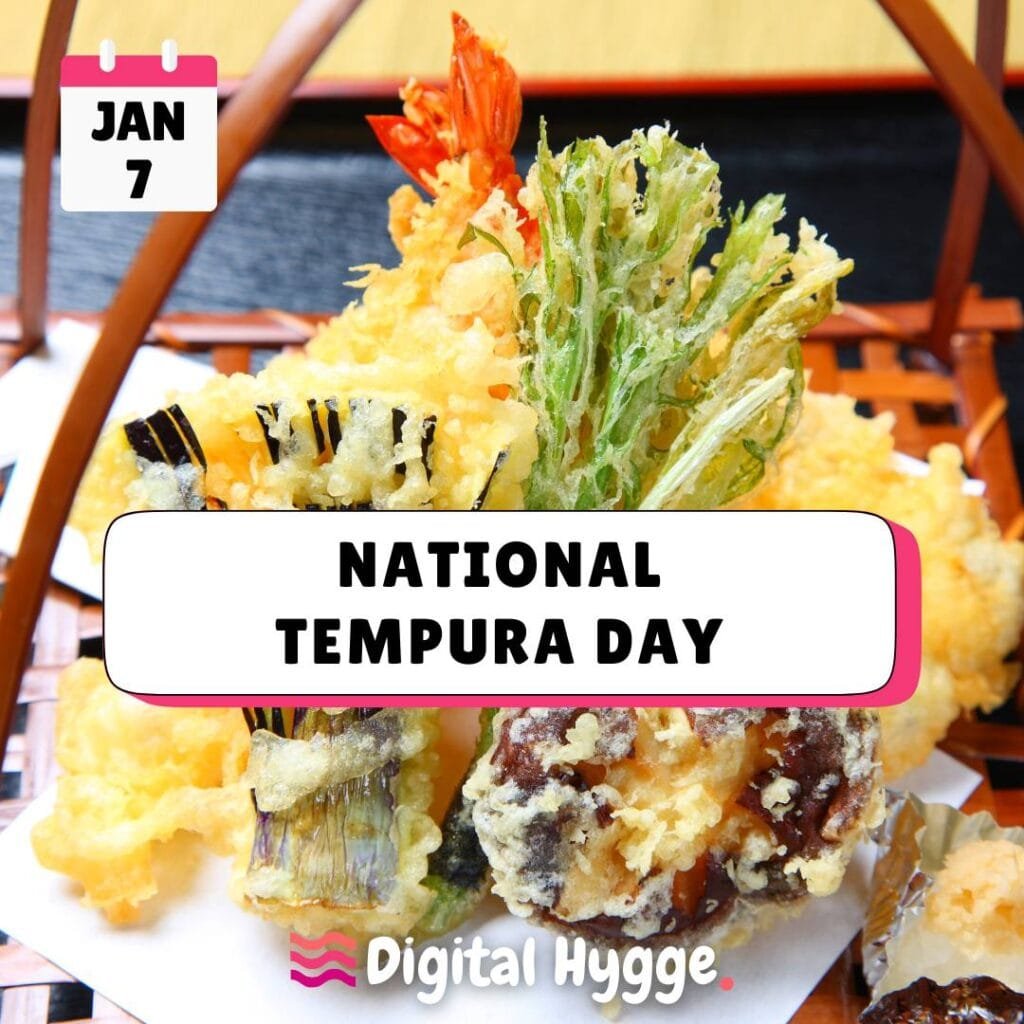
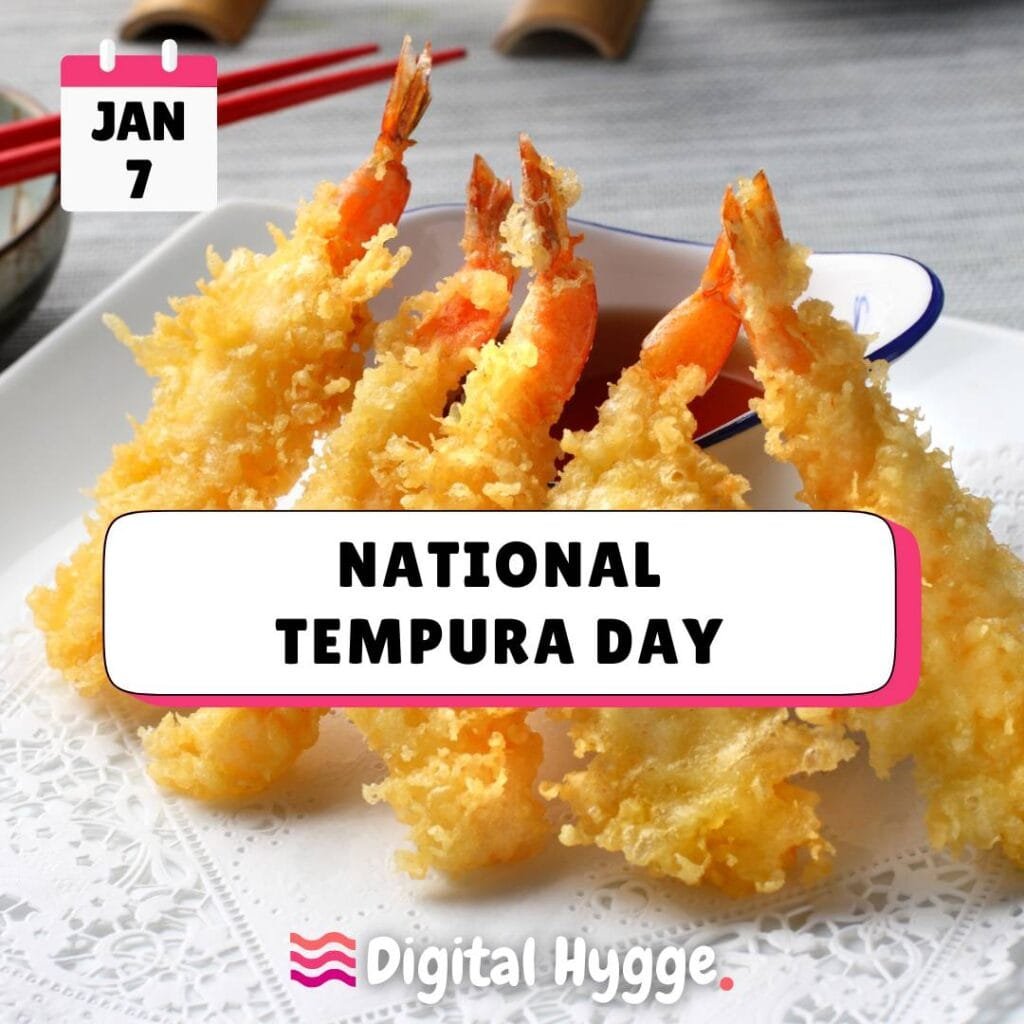
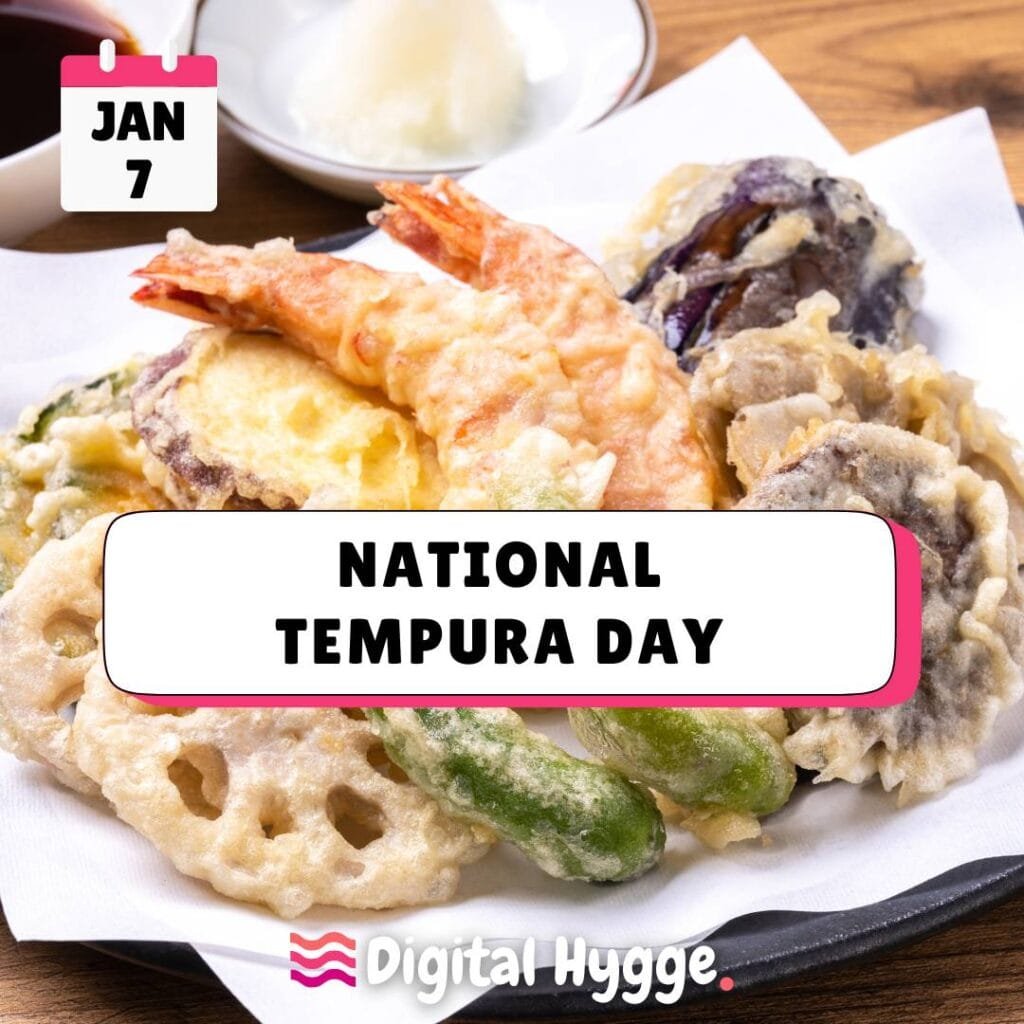
- Traditional tempura commonly features shrimp, sweet potato, eggplant, and shiitake mushrooms.
- Seasonal seafood and vegetables have always played an important role, reflecting Japan’s emphasis on freshness and regional produce.
- Modern kitchens experiment by using soft-shell crab, oysters, sushi components, and even desserts such as tempura ice cream or chocolate.
Where Tempura Comes From
- The frying technique was introduced to Japan in the 1500s by Portuguese missionaries and traders.
- The name “tempura” is linked to the Latin tempora, associated with Christian fasting periods when meat was avoided and fish or vegetables were eaten instead.
- During the Edo period (1603–1868), tempura became popular street food, sold from outdoor stalls because indoor frying posed a fire risk in wooden cities.
How Tempura Gets Its Light, Crispy Texture
- Authentic tempura batter is mixed very lightly with chopsticks and made using ice-cold water. This limits gluten development and creates a thin, crisp coating. When the cold batter meets hot oil, the strong temperature contrast produces a light, airy texture rather than a dense one.
- Traditional Edo-style tempura was fried in sesame oil, which gave it a distinctive nutty aroma. Modern versions more commonly use neutral oils such as canola or other vegetable oils.
The Nabemae Seating Tradition
- In specialist tempura restaurants, the most sought-after seat is the nabemae, located directly in front of the fryer. Diners watch the cooking process, listen to the crisp frying sound known as saku saku, and eat each piece within seconds of being cooked.
Tempura Records
- The world’s largest kakiage (mixed tempura fritter) was made in Shizuoka on March 18, 2018, weighing 7.065 kg (15.57 lbs).
- One of the most expensive tempura meals is served at a high-end restaurant at Nanachōme Kyōboshi in Ginza, Tokyo, where a multi-course experience can cost approximately ¥42,000 (~$400–$420) per person.
- Some restaurants in Sendai are known for oversized tempura bowls weighing up to a kilogram and featuring local delicacies like oysters and whole fish with edible bones.
Ways to Celebrate National Tempura Day
National Tempura Day is easy to celebrate, whether you prefer cooking at home or enjoying the dish prepared by a professional. The focus is on freshness and eating tempura right after it is cooked.
- Make Tempura at Home: Try preparing tempura yourself using a flour, egg, and ice-cold water. Choose classic ingredients such as shrimp, mushrooms, sweet potatoes, or zucchini. Keep the batter cold and mix it gently with chopsticks to achieve a light, crisp coating.
If you want guidance, this short video shows the basic technique step by step:
- Visit a Japanese Restaurant: Ordering a tempura platter at a Japanese restaurant is an easy way to sample different ingredients without cooking. A mixed plate lets you compare textures and flavors while enjoying tempura at its freshest.
- Experiment with Dipping Sauces: Tempura is traditionally served with a light dipping sauce, but small variations can change the experience. Try soy sauce with grated daikon radish, citrus-based ponzu, or a mildly spicy sauce to complement the crisp batter.
- Host a Tempura Dinner: Invite friends to bring ingredients, fry together, and enjoy each piece immediately after it leaves the oil.