


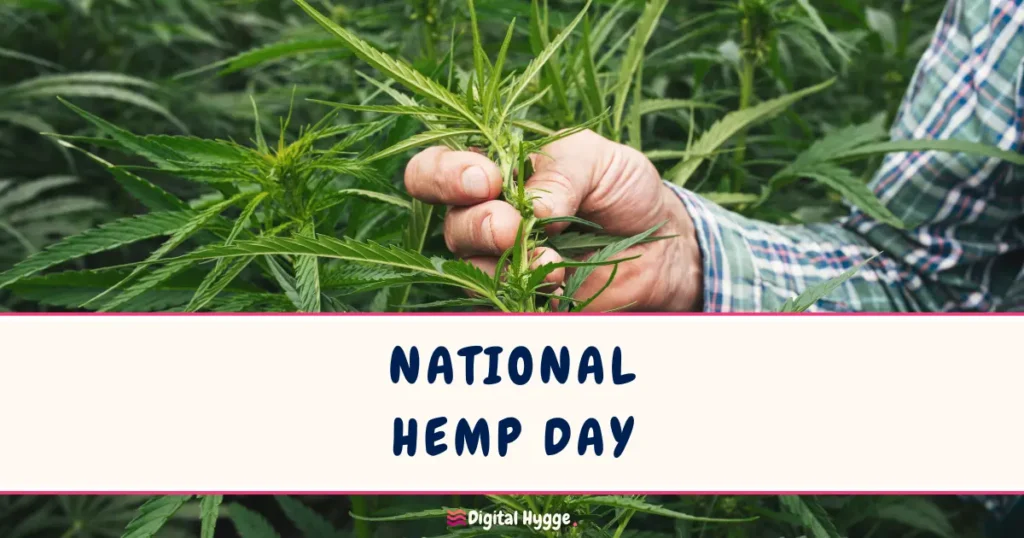

National Hemp Day is celebrated annually on February 4 to recognize the agricultural, environmental, and industrial value of the hemp plant while educating the public about the differences between hemp and marijuana.
Cultivated for thousands of years, hemp grows quickly with little need for pesticides and is used in products such as food, clothing, building materials, and wellness items. It contains only trace amounts of THC (below 0.3%) and is valued today as a sustainable, renewable crop.
National Hemp Day was founded in 2019 by cbdMD following the passage of the 2018 Farm Bill, which federally legalized the cultivation of industrial hemp in the United States.
➡️ A similar day, International Hemp Day, is celebrated on April 21.
When is National Hemp Day Celebrated?
National Hemp Day is observed each year on February 4. If you’d like to plan ahead to explore hemp’s many uses and environmental benefits, here are the upcoming dates for National Hemp Day.
| Year | Date |
|---|---|
| 2026 | February 4, Wednesday |
| 2027 | February 4, Thursday |
| 2028 | February 4, Friday |
| 2029 | February 4, Saturday |
| 2030 | February 4, Monday |
Facts About Hemp
Hemp’s long history and practical benefits help explain why it remains relevant today. These facts highlight its role in agriculture, sustainability, and everyday products:
- Ancient crop: Hemp is one of the oldest cultivated plants, with documented use in ancient China, Egypt, and Mesopotamia for fiber, food, and practical items.
- Hemp in early American history: In colonial America, farmers were required in some regions to grow hemp for rope and sails, and early drafts of the Declaration of Independence were reportedly written on hemp paper.
- Sustainable textile: Compared to cotton, hemp requires significantly less water and fewer pesticides, while its natural pest resistance makes it well suited for eco-friendly clothing production.
- Soil-friendly plant: Hemp helps prevent soil erosion and can restore nutrients to the ground, which makes it a useful rotation crop for farmers.
- Fast-growing: Most hemp varieties reach harvest readiness within 4–6 months, allowing for efficient and high-yield production.
- Biodegradable uses: Hemp can be used to produce biodegradable plastics and packaging, offering alternatives to petroleum-based materials.
How People Celebrate National Hemp Day
Celebrating National Hemp Day can be practical and informative. Many people use the day to explore hemp-based alternatives, learn more about sustainable farming, or share accurate information about the plant’s benefits. Here are a few common ways to take part:
- Try hemp-based products: Explore items made from hemp, such as hemp milk, clothing, skincare products, or hemp seeds added to smoothies and meals.
- Cook with hemp seeds: Hemp seeds (also called hemp hearts) are rich in protein and Omega-3 fatty acids and can be easily added to salads, oatmeal, or yogurt.
- Learn about hemp farming: Take time to understand how hemp supports soil health, grows with fewer pesticides, and contributes to more sustainable agricultural practices.
- Explore hemp in fashion and building: Learn about hemp’s durability and low water use in clothing, while materials like hempcrete are gaining attention in sustainable construction.
- Raise awareness: Share fact-based information about hemp’s uses and environmental benefits on social media using #NationalHempDay.
- Follow current research: Use the day to learn about recent guidelines and innovations, including developments in hemp-based bioplastics and evolving agricultural standards.