

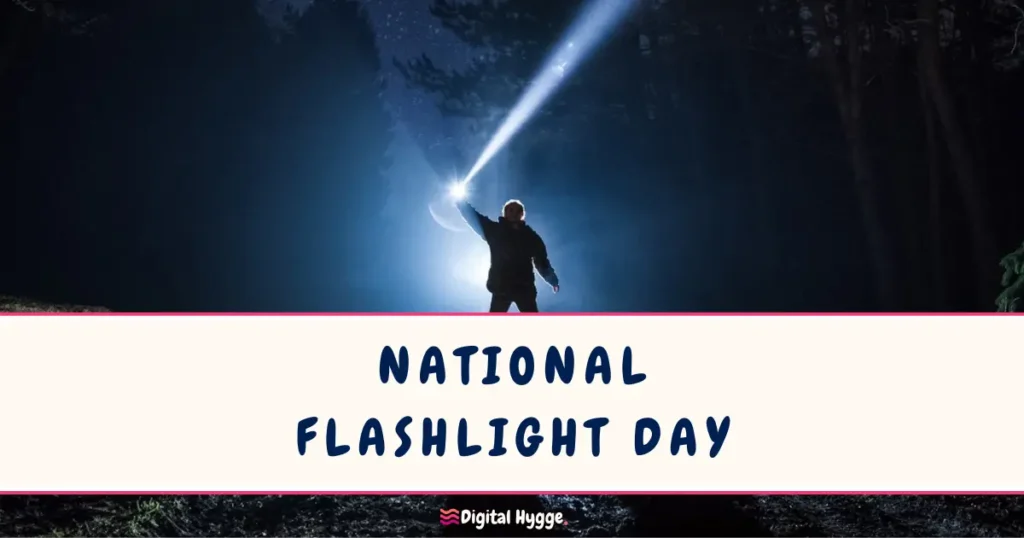

National Flashlight Day is observed on December 21, the winter solstice and the shortest day of the year in the Northern Hemisphere. With daylight at its lowest point, the observance draws attention to how essential a reliable light source is during long winter nights.
The date is closely tied to preparedness rather than celebration. Extended darkness and winter weather increase the likelihood of power outages, making the flashlight a basic but important safety tool. The day encourages checking batteries, testing equipment, and keeping emergency lighting within easy reach.
Flashlights became possible in the late 1890s with the invention of dry cell batteries and small incandescent bulbs. The first widely recognized battery-powered flashlight is credited to David Misell, who patented his design in 1899; it was soon adopted by the New York City Police Department. Some sources also credit Joshua Lionel Cowen with developing an early portable electric light in 1898.
When Is National Flashlight Day Celebrated?
National Flashlight Day is celebrated on a fixed date each year, aligning with the winter solstice on December 21. While the date stays the same, the weekday changes from year to year.
| Year | Date |
|---|---|
| 2025 | December 21, Sunday |
| 2026 | December 21, Monday |
| 2027 | December 21, Tuesday |
| 2028 | December 21, Thursday |
| 2029 | December 21, Friday |
| 2030 | December 21, Saturday |
Flashlight Facts
Here are a few surprising facts that show how much flashlights have changed in just over a century:
- The First Flashlight Was a True ‘Flash’ Light: The first flashlight, created in 1899, could only emit light in short bursts due to the primitive technology of early batteries and bulbs. The batteries were unreliable, and the bulbs couldn’t handle prolonged use, so they would “flash” on and off. This is where the name “flashlight” comes from.
- The Brightest Flashlight in the World: The title for the brightest flashlight currently goes to the IMALENT SR32, which can produce a jaw-dropping 120,000 lumens. To give you an idea, a typical household flashlight emits around 100 lumens, so this beast is powerful enough to light up vast areas—up to more than 2,000 meters away. Weighing almost 5 pounds and equipped with a shoulder strap, it’s really more like carrying a portable spotlight than a regular flashlight.
- Flashlights on the Moon: During the Apollo 11 mission in 1969, astronauts took specially designed flashlights with them to the moon. These lights had to be durable enough to function in the harsh environment of space, enduring extreme temperatures, zero gravity, and the vacuum of space. Imagine using your flashlight while taking a stroll on the lunar surface!
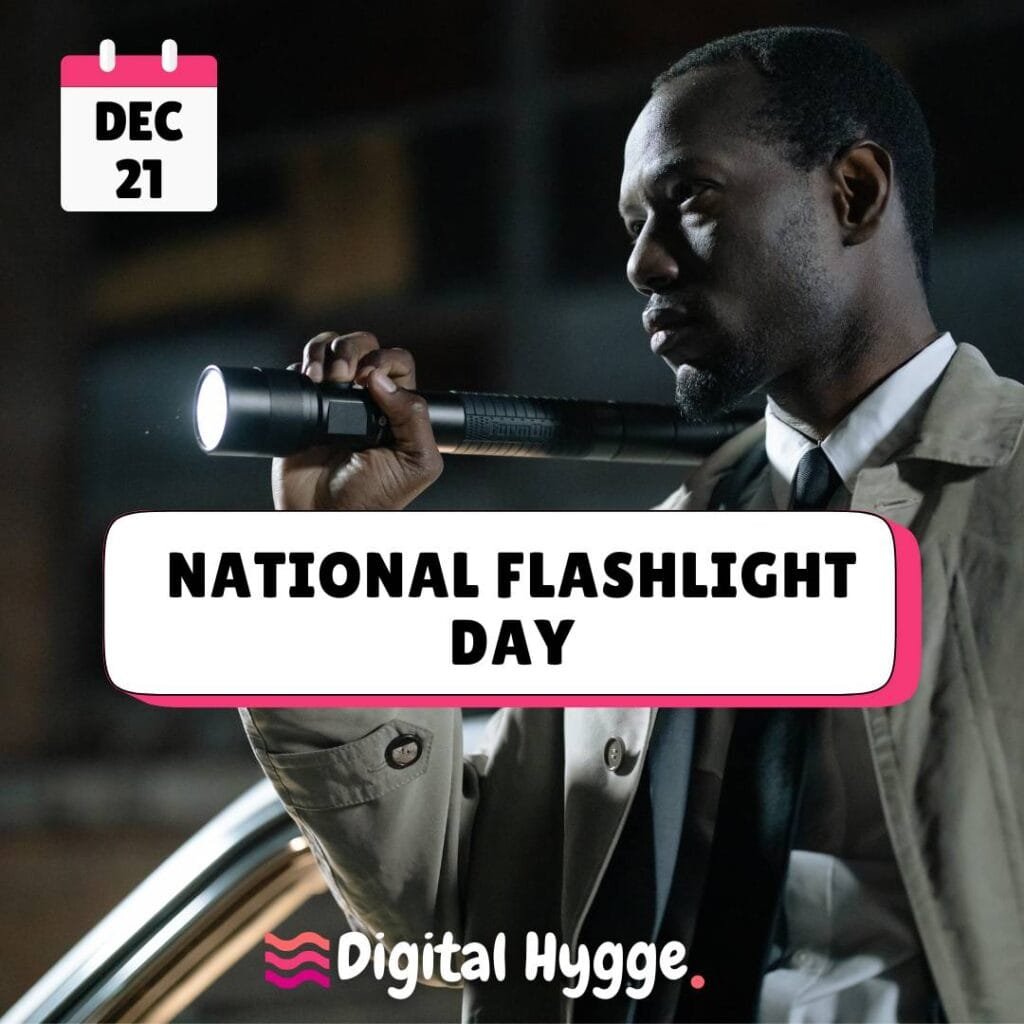
- A Lifesaver in Rescue Operations: Flashlights have played a critical role in search and rescue missions for decades. High-powered, long-range flashlights help rescuers locate people trapped in dangerous situations, from natural disasters to collapsed buildings. These lights are often waterproof and designed to survive extreme conditions, proving that a flashlight can be much more than a household tool—it can be a lifesaver.
How to Celebrate National Flashlight Day
National Flashlight Day highlights how a simple light source can support safety, learning, and everyday exploration. Here are a few practical and engaging ways to mark the day:
- Test your emergency kit. Check that your flashlight works properly, replace old batteries, and review the rest of your emergency supplies. Winter storms and power outages make this a timely and useful habit.
- Take a nighttime walk. Use a flashlight for a quiet evening walk around your neighborhood or a nearby park. Moving through the dark with a focused beam of light can feel calm and surprisingly grounding.
- Upgrade your flashlight. Modern flashlights offer features like LED brightness, rechargeable batteries, solar charging, and USB ports. National Flashlight Day is a good excuse to replace outdated models with something more reliable.
- Teach preparedness skills. Show children how to use a flashlight safely and explain why it’s important during emergencies. Pair it with a simple discussion about water, food, and basic first aid so the lesson feels practical, not alarming.
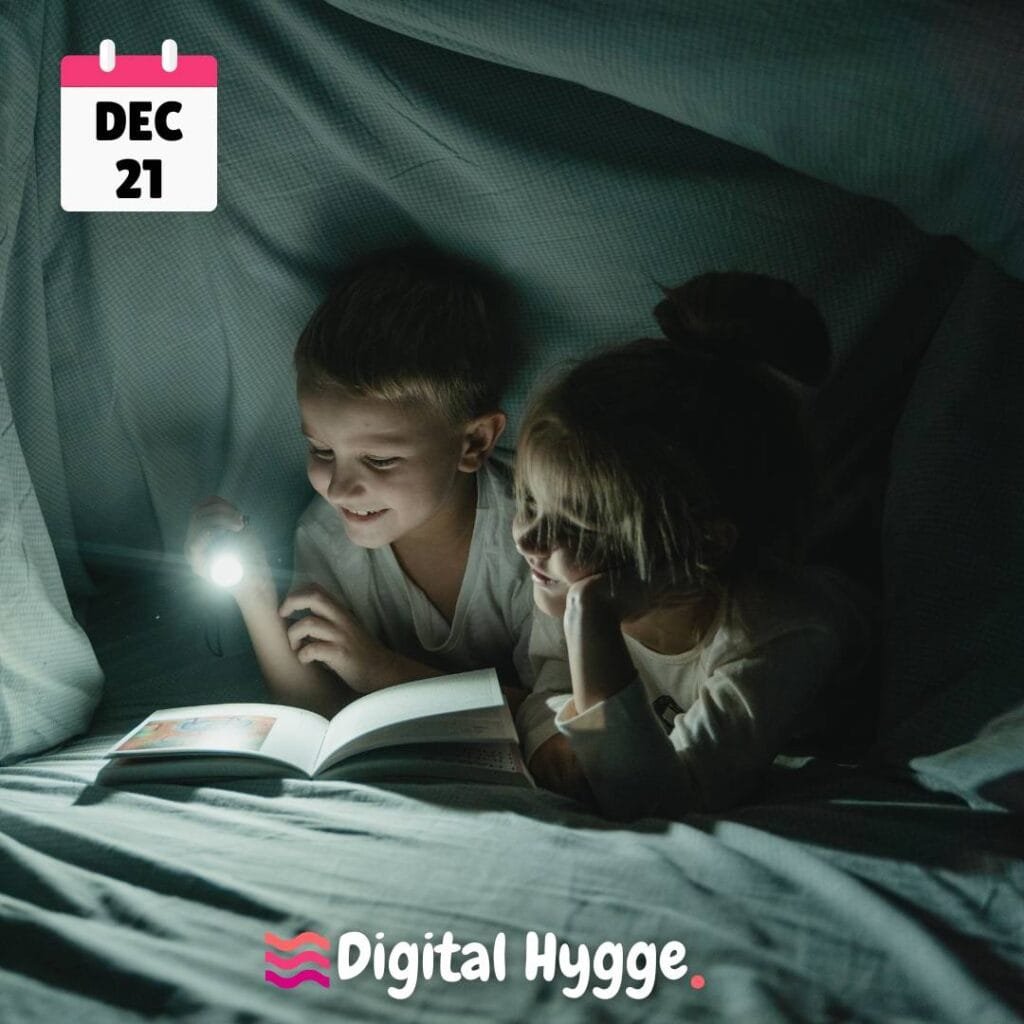
- Read by flashlight. Turn off the lights and read using only a flashlight. It creates a cozy, focused atmosphere and works especially well for bedtime stories or shared reading time.