



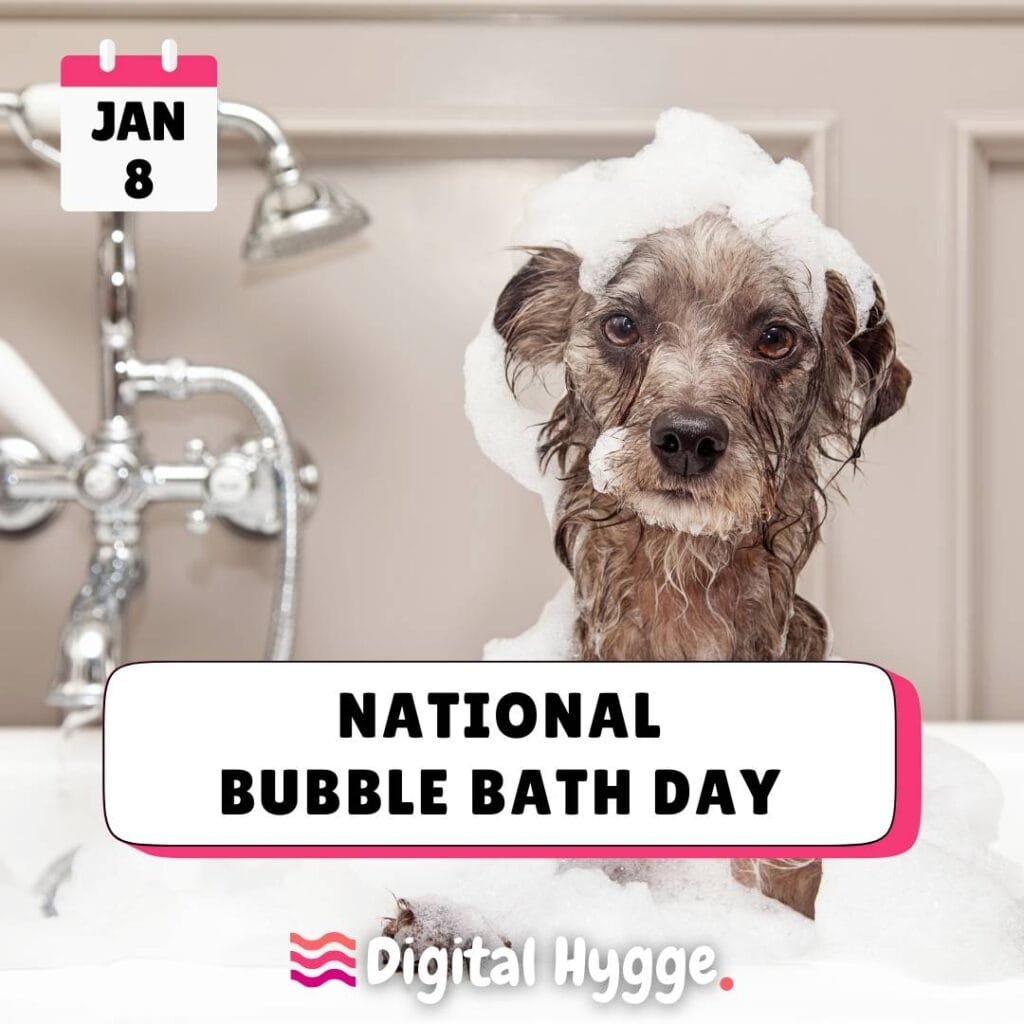
National Bubble Bath Day is observed each year on January 8. The day focuses on the bath as a form of winter self-care, when warm water offers comfort and relief from cold weather. Hot baths are commonly linked to relaxation, easing muscle tension, supporting circulation, clearing congestion, and improving sleep.
The observance has been recognized in the United States since at least the late 1990s.
When Is National Bubble Bath Day Celebrated?
National Bubble Bath Day is observed each year on January 8. The date falls early in the year, offering a simple opportunity to slow down and enjoy a moment of relaxation during winter. The table below shows upcoming dates so you can plan ahead if you want to make it a yearly tradition.
| Year | Date |
|---|---|
| 2026 | January 8, Thursday |
| 2027 | January 8, Friday |
| 2028 | January 8, Saturday |
| 2029 | January 8, Monday |
| 2030 | January 8, Tuesday |
History of Bubble Baths
Bubble baths are a relatively modern comfort, shaped by changes in soap-making, fragrance, and marketing that gradually turned bathing into a more relaxing experience.
- Fragrance Comes First (Late 1800s). Before bubbles were possible, scent changed how people experienced bathing. As soap production advanced in the 19th century, manufacturers began adding fragrance. In 1866, Colgate pioneered perfumed soaps, followed in 1872 by Cashmere Bouquet. These products helped shift bathing from a purely practical task toward something more indulgent.
- The First Bubble Baths (1930s). True bubble baths became possible in the 1930s, when synthetic surfactants replaced traditional soap. These new ingredients created longer-lasting foam in water. In 1933, Fel-Pro Company introduced one of the first commercial bubble bath products, allowing bubbles to form reliably for the first time.
- Bubble Baths for Children (1950s–1960s). In the mid-20th century, bubble baths were widely marketed to families. Products were designed to make bath time more appealing to children through color, scent, and playful branding. This era included the launch of Mr. Bubble in 1961, which helped move bubble baths from luxury stores into local drugstores.

- Color and Sensory Focus (1980s). By the late 20th century, bath products increasingly emphasized color and scent. In 1989, modern bath bombs were introduced, placing strong focus on visual effects and fragrance. This period expanded the idea of bathing as a sensory experience rather than just hygiene.
- Bubble Baths as Self-Care (Early 2000s). By the early 2000s, bubble baths were widely mass-produced and globally available. They became closely associated with relaxation and self-care, especially during colder months, using a wide range of scents and colors to enhance comfort and mood.
Did You Know? Facts About Bubble Baths
There is more to bubbles than it might seem. Behind the foam are scientific principles that explain why bubbles behave the way they do and why soaking in a warm bath has remained appealing for centuries.
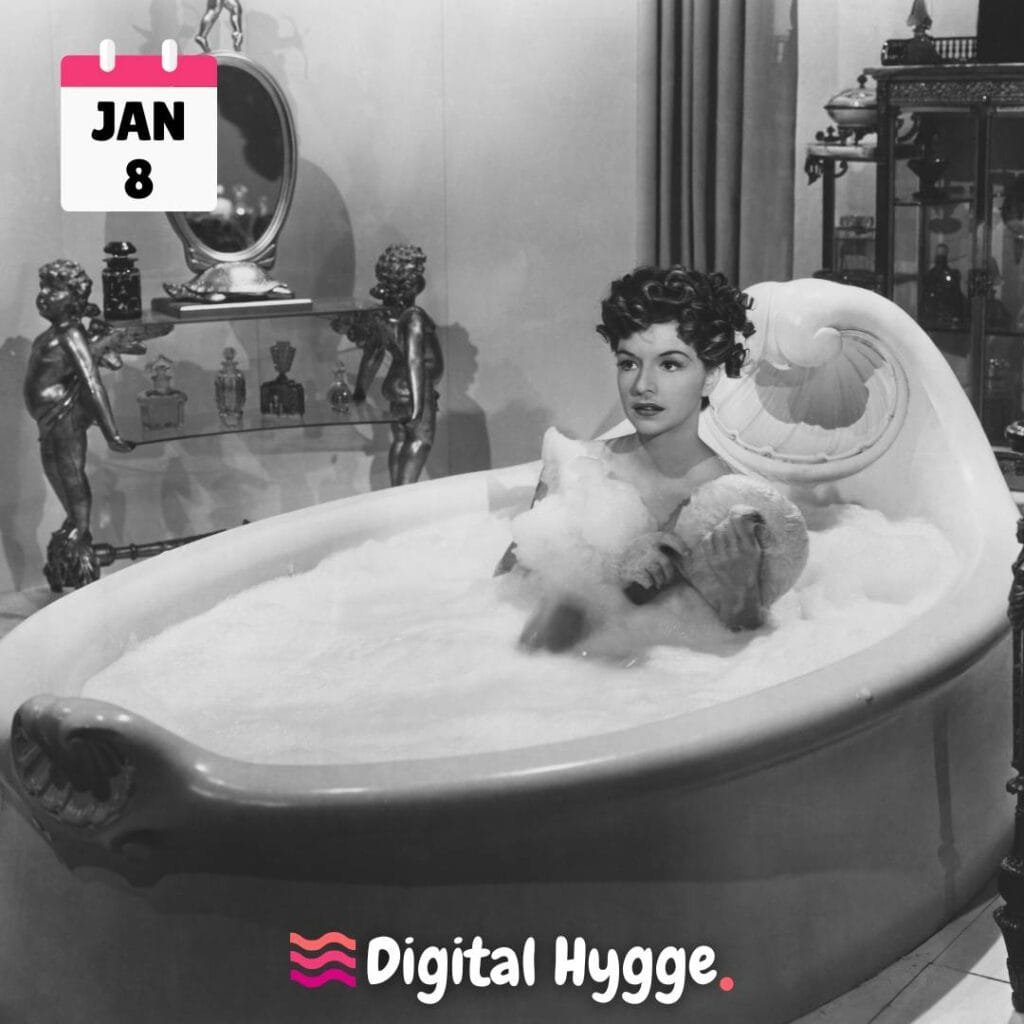
- Bubble Baths in Film and Popular Culture. In mid-20th-century cinema, bubble baths were often used as a visual tool. Thick foam allowed filmmakers to imply a private or luxurious bathing scene without showing nudity, keeping scenes modest while still suggesting comfort or intimacy. Famous scenes include Marilyn Monroe in Some Like It Hot and Audrey Hepburn in Breakfast at Tiffany’s.
- Why Bubbles Matter. A thick layer of foam acts as insulation, slowing heat loss and helping bathwater stay warm longer by reducing evaporation. The surfactants that create bubbles also keep oils and dirt suspended in the water, which can reduce residue rings along the tub.
- The Science Behind Bubbles. Bubbles naturally form round shapes because a sphere uses the least surface area to hold air. When many bubbles gather, they arrange themselves into repeating patterns that scientists study to understand how cells and tissues organize efficiently. For this reason, bathwater bubbles are sometimes used as models in physics and biology research.
- Bubble Baths and Self-Care. Many people associate bubble baths with slowing down and decompressing. Warm water combined with scent and quiet time can support relaxation and help signal the body to rest, making bubble baths a common part of self-care routines.
- Therapeutic Additions. Bubble baths are often paired with bath salts, essential oils, or Epsom salts. These additions are commonly used to ease muscle tension, promote relaxation, and support better sleep, especially in the evening.
- Health and Safety Notes. Bubble baths are generally not recommended for very young children. Pediatric guidance often suggests waiting until around age three, as soaps can irritate sensitive skin and increase the risk of urinary tract infections. For adults, gentle formulas and moderate soak times are usually advised.
Ways to Celebrate National Bubble Bath Day
National Bubble Bath Day is the perfect excuse to elevate your bath time experience. From creating a spa-like atmosphere at home to trying out new bath products, there are plenty of ways to make the most of this holiday. Here are some simple yet luxurious ideas to help you celebrate in style.
- Create a spa-like atmosphere. Light some candles, dim the lights, and play relaxing music while you enjoy your bubble bath. You can even add some rose petals or a few drops of essential oil for an extra touch of luxury.
- Add bath accessories. Use a bath pillow, a bath tray for holding your favorite book or drink, or try a new bubble bath product with a scent you love.
- Try different bubble bath products. Explore bubble bath options with unique scents or added benefits like skin moisturization. Brands like Lush, The Honest Company, and Dr. Teal’s offer many varieties.
- Share the love. Post a picture of your bubble bath setup on social media using the hashtag #NationalBubbleBathDay. It’s a fun way to inspire others to join in the relaxation!