


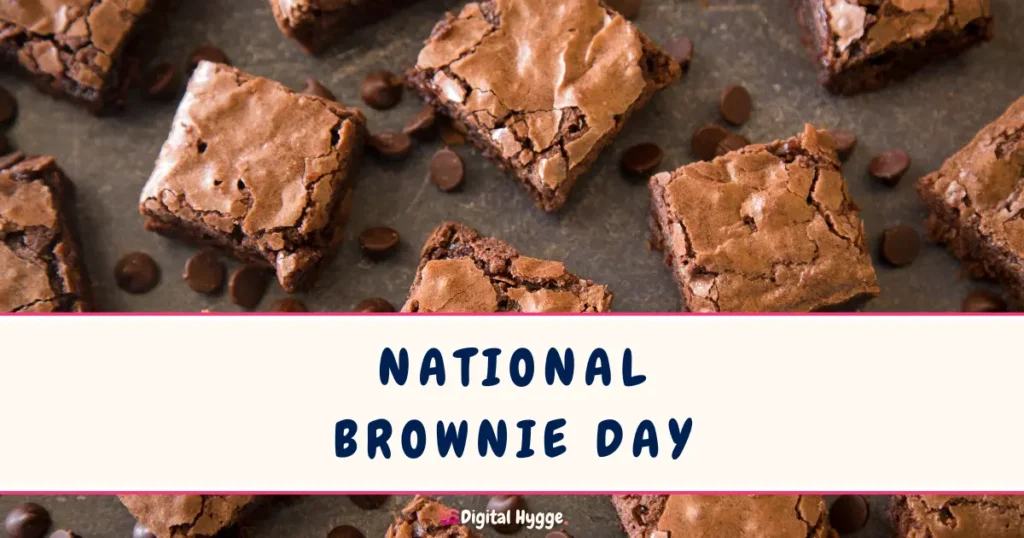

National Brownie Day is observed each year on December 8, a date that draws attention to one of the most recognizable American desserts.
The brownie likely originated in Chicago in 1893, when Bertha Palmer asked the pastry chef at the Palmer House Hotel to create a small, cake-like dessert that could be packed into boxed lunches for the World’s Columbian Exposition. The first version featured chocolate, walnuts, and an apricot glaze, and it was naturally dense because early recipes did not use baking powder. Brownies became popular across the United States in the early 20th century when cookbooks began including both cocoa-based and chocolate-based variations.
When is National Brownie Day?
National Brownie Day is observed every year on December 8, giving it a consistent place on the holiday calendar during the early holiday season. The fixed date makes it easy to plan whether you enjoy baking brownies at home or prefer picking one up from a local bakery. Here are the upcoming dates if you’d like to mark them for future celebrations:
| Year | Date |
|---|---|
| 2025 | December 8, Monday |
| 2026 | December 8, Tuesday |
| 2027 | December 8, Wednesday |
| 2028 | December 8, Friday |
| 2029 | December 8, Saturday |
| 2030 | December 8, Sunday |
Did you know you can look forward to more dessert-themed observances this month, including National Cupcake Day on December 15 and National Chocolate Candy Day on December 28?
Fun Brownie Facts You Might Not Know
Brownies have been part of American baking for more than a century, and their history includes details that many people don’t know about. These facts highlight how the dessert developed, changed over time, and inspired many of the desserts we enjoy today.
- The first known brownie was topped with apricot glaze. The original Palmer House Brownie, created for the 1893 World’s Columbian Exposition, included walnuts and an apricot glaze—a feature the hotel still uses in its recipe today.
- Early brownies did not contain leavening. Baking powder and baking soda were not part of the earliest recipes, which is why early brownies were much denser than many versions baked today.
- The earliest printed brownie recipe appeared in 1899. A recipe called “Brownies” appeared in the Machias Cookbook in Maine, but it was closer to a molasses bar. Chocolate was not added until later recipes standardized the dessert.
- Brownies entered mainstream American baking by the 1910s. Cookbooks such as the Boston Cooking School Cookbook helped spread brownie recipes nationwide, leading to widespread home baking of both cocoa- and chocolate-based varieties.
- The edges vs. center debate has been around for decades. Some bakers prefer chewy edges, while others prefer soft centers. This long-standing divide even inspired specialty pans designed to create more crusty edges.
- Chocolate was once the most expensive part of the recipe. In the early 20th century, chocolate was a luxury ingredient, so many home cooks relied on cocoa powder to make brownies more affordable.
- Blondies came first. Before chocolate brownies became common, blondie-style molasses or brown sugar bars were already circulating in American cookbooks, making brownies a later evolution rather than the original bar dessert.
- According to Guinness World Records, the largest brownie ever made weighed 152 kg (335.1 lb) and was baked in Jeddah, Saudi Arabia, on September 23, 2022. It required 210 packs of brownie mix, 504 eggs, over 23 liters of oil, and nearly 10 liters of water. Measuring 2 meters wide, 2 meters long, and 3 cm high, this massive dessert took 3 hours to bake!
Ways to Celebrate National Brownie Day
There are many ways to enjoy National Brownie Day, so whether you’re baking from scratch or grabbing a box mix, these ideas will help you celebrate the right way:
- Bake a classic or try a new variation. Choose the original Palmer House style, a traditional fudgy brownie, or a variation like salted caramel, peppermint, or gluten-free.
- Visit a local bakery. Many bakeries offer seasonal brownie flavors in December. Picking up a slice is a simple way to join the celebration.
- Learn about the dessert’s history. Read about the 1893 origin story, early cookbook recipes, or how brownies influenced other bar desserts.
- Experiment with toppings. Add nuts, fruit preserves, espresso powder, or a swirl of cream cheese to explore how small changes affect texture and flavor.
- Host a brownie tasting. Invite friends or family to compare a few different recipes—fudgy, cakey, blondie-style, or edge vs. center pieces.