

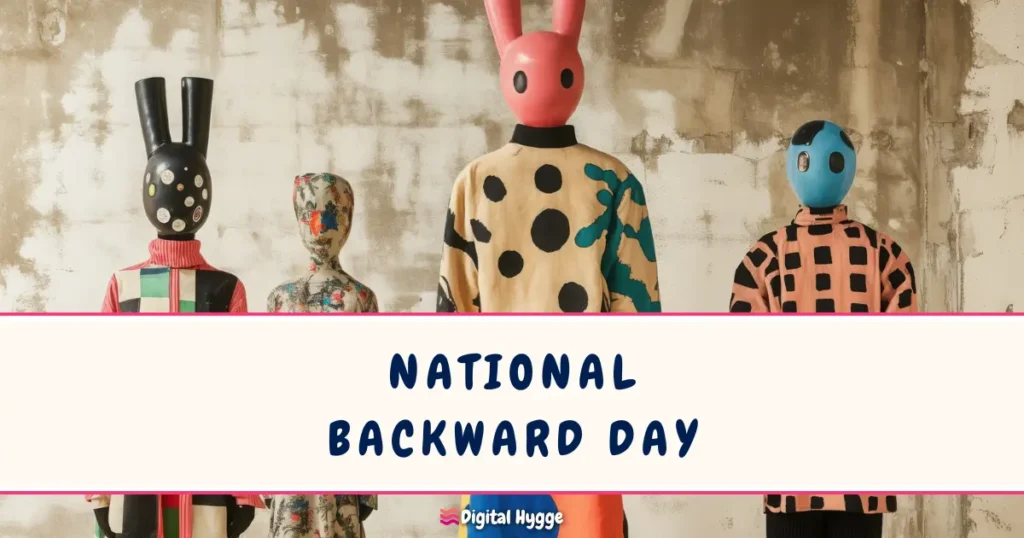

National Backward Day is observed each year on January 31. It was created in 1961 by Sarah Miller and Megan Scott in Davidson County, North Carolina, as a fun way to disrupt everyday routines by doing things in reverse. This can include reversing words or phrases, rethinking routines, or approaching familiar tasks from a different angle.
From a psychological perspective, doing ordinary tasks in an unusual order briefly disrupts automatic habits, prompting the brain to slow down, pay attention, and think more flexibly.
When Is National Backward Day?
National Backward Day is observed each year on January 31, the final day of the month. The timing supports the theme of reversal, marking an endpoint that encourages a brief pause before the calendar moves forward again.
| Year | Date | Day of the Week |
|---|---|---|
| 2026 | January 31 | Saturday |
| 2027 | January 31 | Sunday |
| 2028 | January 31 | Monday |
| 2029 | January 31 | Wednesday |
| 2030 | January 31 | Thursday |
Did You Know? Facts About Backward Thinking
Mirror writing and reversed text have been used in puzzles, secret messages, and art for centuries. Children often experiment with backward letters while learning to write, and adults use reversal techniques in memory games and brain teasers. Even simple backward reading activates different mental processes than normal reading.
How National Backward Day Is Observed
National Backward Day works best when approached creatively.
- Reversing everyday habits: People often mark the day by doing simple tasks backward or out of order, such as wearing clothes inside out, eating dinner foods for breakfast, starting with dessert, walking backward for short distances, or attempting to read and write from right to left.
- School activities: In classrooms, teachers frequently organize Backward Day themes where routines are flipped, schedules are reversed, or lessons are approached in an unusual order to make students think differently.
- Social media participation: The day spreads easily online, with individuals and brands using the hashtag #NationalBackwardDay to share photos, short videos, or captions written in reverse text that highlight playful disruptions of routine.
- Cognitive and educational use: Parents and educators often use the observance to build cognitive flexibility. Common activities include saying the alphabet backward, solving puzzles in reverse order, or following instructions from the last step to the first.