

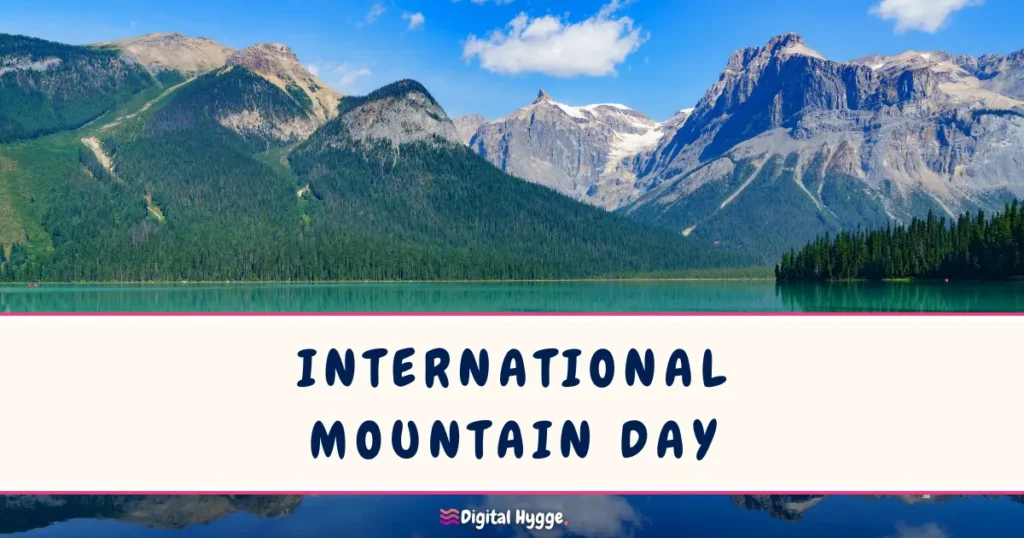

International Mountain Day, observed each year on December 11, highlights the essential role mountains play in sustaining life. They supply freshwater, shelter diverse plant and animal species, and support millions of people who rely on mountain resources for their daily needs. These environments also feed major river systems that serve nearly half of the world’s population.
Despite their importance, mountains are under pressure from climate change, deforestation, pollution, and unsustainable land use, all of which threaten both local communities and the ecosystems around them.
The observance encourages people and governments to learn about these challenges and support efforts that protect mountain landscapes. Maintaining healthy mountain ecosystems helps secure water, food, and stable living conditions for regions far beyond the mountains themselves.
History of International Mountain Day
The idea began with the 1992 Rio Earth Summit, where mountain development was included in Agenda 21. In 2003, the United Nations designated December 11 as International Mountain Day to promote global awareness and collaboration. Each year features a theme that draws attention to a specific issue related to mountain sustainability.
When Is International Mountain Day Celebrated?
International Mountain Day is observed every year on December 11. The fixed date makes it easy to plan activities, events, or conservation efforts connected to mountain awareness. The table below shows when the observance falls through 2030.
| Year | Date |
|---|---|
| 2025 | December 11, Thursday |
| 2026 | December 11, Friday |
| 2027 | December 11, Saturday |
| 2028 | December 11, Monday |
| 2029 | December 11, Tuesday |
| 2030 | December 11, Wednesday |
The 2025 theme, “Glaciers matter for water, food and livelihoods in mountains and beyond,” emphasizes the importance of glaciers as natural water reserves. Their rapid melting affects agriculture, drinking water supplies, and the long-term health of mountain ecosystems.
Why Mountains Matter
Mountains contribute to life on Earth in several key ways:
- Human life: About 15% of the global population lives in mountain areas and depends on their natural resources.
- Freshwater: Mountain glaciers, snow, and rivers provide water to roughly half of humanity.
- Biodiversity: These environments host unique species and many of the world’s biodiversity hotspots.
- Climate systems: Mountain regions help regulate weather patterns and store carbon.
Fun Mountain Facts
Mountains shape climates, store water, and create some of the most striking landscapes on Earth. Many also hold surprising records and reveal how active our planet still is. These facts offer a closer look at what makes mountain ranges and peaks so remarkable.
- Mount Everest is the highest point above sea level, reaching 29,029 feet (8,848 meters).
- The Andes in South America form the world’s longest continental mountain range, stretching more than 4,350 miles (7,000 kilometers).
- The Himalayas continue to rise by about 0.8 inches (2 cm) each year as tectonic plates push against one another.
- Mauna Kea in Hawaii is the tallest mountain when measured from its base on the ocean floor, rising over 33,500 feet (10,000 meters).
- The Alps are Europe’s youngest major mountain range and home to more than 14 million people, with around 120 million visitors each year.
- Mount Kilimanjaro in Tanzania is the tallest free-standing mountain on Earth, standing at 19,341 feet (5,895 meters).
- The Rocky Mountains span roughly 3,000 miles from Canada to New Mexico and formed about 80 million years ago.
How to Celebrate International Mountain Day
Here are a few ways you can celebrate this day:
- Learn and Advocate: Educate yourself about mountain ecosystems and the communities living in these regions. Share what you learn on social media, using the hashtag #MountainsMatter to raise awareness.
- Support Sustainable Tourism: If you’re planning a trip, choose eco-friendly destinations and activities that promote the protection of mountain regions.
- Get Outdoors: If you live near mountains, spend the day hiking, camping, or simply appreciating the natural beauty. You can also support local conservation efforts by volunteering with organizations dedicated to preserving mountain ecosystems.