


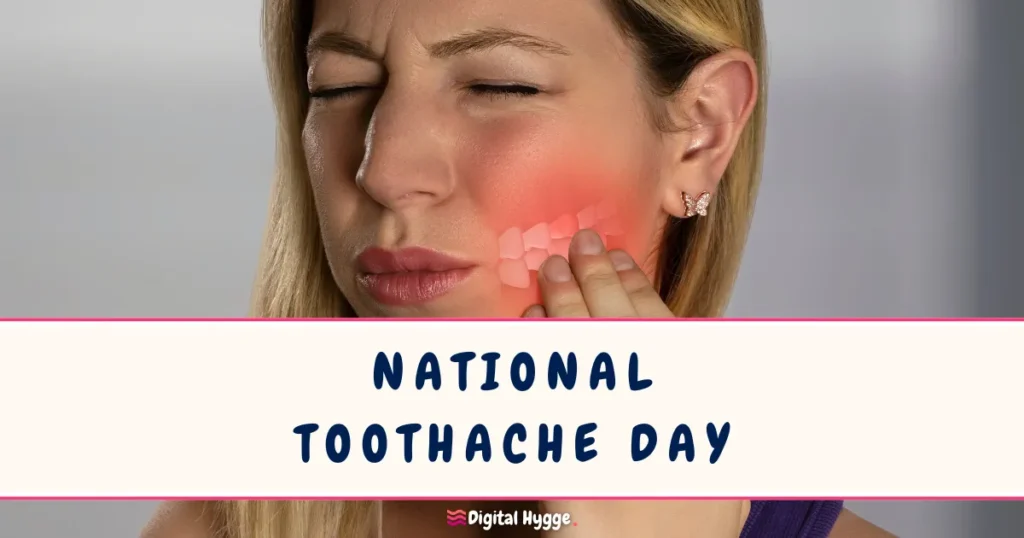

National Toothache Day is observed annually on February 9 during National Children’s Dental Health Month. It highlights tooth decay as the most common chronic disease worldwide and promotes prevention through the 2-2-2 Rule: brush twice a day for two minutes and visit the dentist twice a year.
The date coincides with the feast day of Saint Apollonia, who was martyred in 249 AD and later became associated with dental pain after her teeth were forcibly removed.
The observance focuses on proactive prevention, encouraging dental checkups, replacing toothbrushes every three to four months, and draws attention to new smart brushing tools that monitor pressure and coverage.
When Is National Toothache Day?
National Toothache Day is observed on a fixed date each year. It always falls on February 9, regardless of the day of the week. Below are the upcoming dates for National Toothache Day over the next several years:
| Year | Date and Day |
|---|---|
| 2026 | February 9, Monday |
| 2027 | February 9, Tuesday |
| 2028 | February 9, Wednesday |
| 2029 | February 9, Friday |
| 2030 | February 9, Saturday |
Facts About Toothaches and Dental Health
- Ancient Remedies: Early civilizations used substances such as honey, garlic, and herbal mixtures to relieve tooth pain, reflecting early attempts to manage dental problems before modern tools were invented.
- Toothaches as Warning Signs: Tooth pain often signals underlying issues such as cavities, gum disease, infections, or jaw disorders, making it an important indicator that dental care is needed.
- Tooth Sensitivity: Sensitivity to hot or cold foods does not always indicate serious damage. It affects about one in eight people and is often managed with toothpaste formulated specifically for sensitive teeth.
- Evolution of Dental Care: Before the 18th century, dental treatments relied on basic tools and limited knowledge. Advances in dentistry have since made diagnosis, prevention, and pain management far more effective.
- Animals and Dental Health: Animals can also experience toothaches. Many zoos and veterinary clinics employ specialized dental care to treat oral health issues in animals.
How to Observe National Toothache Day
National Toothache Day focuses on prevention and routine care. The following actions support better oral health and help reduce the risk of tooth pain.
- Schedule a Dental Checkup: Regular visits allow dentists to detect cavities, gum disease, or enamel damage before symptoms appear.
- Replace Your Toothbrush: Toothbrushes should be changed every three to four months to maintain effective cleaning and reduce bacterial buildup.
- Brush and Floss Daily: Brushing twice a day and flossing once a day removes plaque and debris that can lead to decay and gum problems.
- Watch Sugar and Acid Intake: Sugary and acidic foods contribute to enamel erosion and cavities. Drinking water helps rinse away food particles and acids.
- Learn the Causes of Tooth Pain: Understanding common sources of toothaches, such as cavities or sensitivity, helps determine when professional care is needed.