


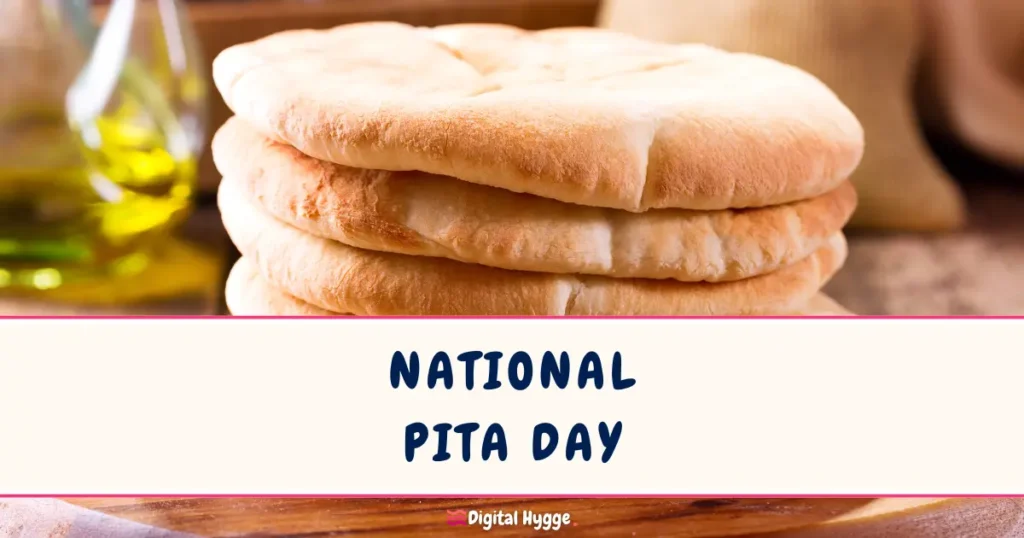

National Pita Day is on March 29 and celebrates the dipping, scooping, and wrapping of as many ingredients as possible into this delicious bread. The day first appeared on social media in 2021 but the creator or founder has not been identified.
In terms of popularity, National Pita Day is a growing but still niche celebration. It gained traction primarily through social media and has since attracted commercial attention, most notably from the Mediterranean fast-casual chain CAVA, which runs month-long promotions around the day, offering free pita chips, in-app games, sweepstakes, and loyalty rewards to its members.
While it doesn’t yet rival major food holidays like National Pizza Day or National Taco Day in mainstream awareness, National Pita Day is steadily building a loyal following among food enthusiasts and Mediterranean cuisine lovers.
What Is Pita Bread?
Pita is a round, flat bread made from wheat flour, water, yeast, and salt. It has been eaten for thousands of years and is a staple across the Mediterranean, the Middle East, and neighboring regions.
Some pitas puff up during baking, forming a pocket inside. This happens because the high oven heat rapidly turns moisture in the dough into steam, which separates the two layers of dough and creates the signature pocket. It can be opened and filled like a sandwich. Other types of pita stay flat with no pocket at all.
Pita goes by many names depending on the region. In Arabic it is often called khubz or eish, while in Turkish it is known as pide. In Greece, the word pita typically refers to pastries and pocketless wraps rather than the bread familiar to English speakers. In the Balkans, the pocket version is commonly called lepinja or somun.
Many restaurants run deals to mark the occasion — CAVA, for example, has historically offered free pita chips to rewards members on this day. Here are three delicious ways to celebrate at home:
How Is Pita Used?
Pita is beloved in kitchens around the world, valued above all for its versatility:
- Pita chips — cut and baked until crispy, enjoyed as a snack on their own or alongside dips.
- Wraps and sandwiches — filled with grilled meats like kebabs and gyros, or stuffed with falafel, fresh vegetables, or cheese.
- Dipping — served alongside hummus, tzatziki, or other sauces as a simple and satisfying accompaniment to almost any meal.
Ways to Celebrate National Pita Day
Here are some inspiring ways to enjoy pita on this special day:
- Try Homemade Pita: Bake your own pita bread at home and enjoy it fresh out of the oven. It’s surprisingly easy and rewarding! Customize the flavor by adding herbs, spices, or a touch of garlic to the dough for a personal twist.
- Make a Mediterranean Feast: Pair pita with classic dips like hummus, baba ghanoush, or tzatziki, and serve with falafel, kebabs, or shawarma. Add a side of fresh salads, like tabbouleh or Greek salad, to round out the meal.
- Snack on Pita Chips: Slice pita into triangles, bake them until crispy, and serve with your favorite dips. Sprinkle the chips with seasonings like paprika, garlic powder, or cinnamon for extra flavor.
- Share Your Creations: Post photos of your pita-inspired meals on social media using hashtags like #NationalPitaDay or #LovePita to inspire others to join the celebration. You could also share recipes or tips to encourage your friends and followers to get creative with pita.