


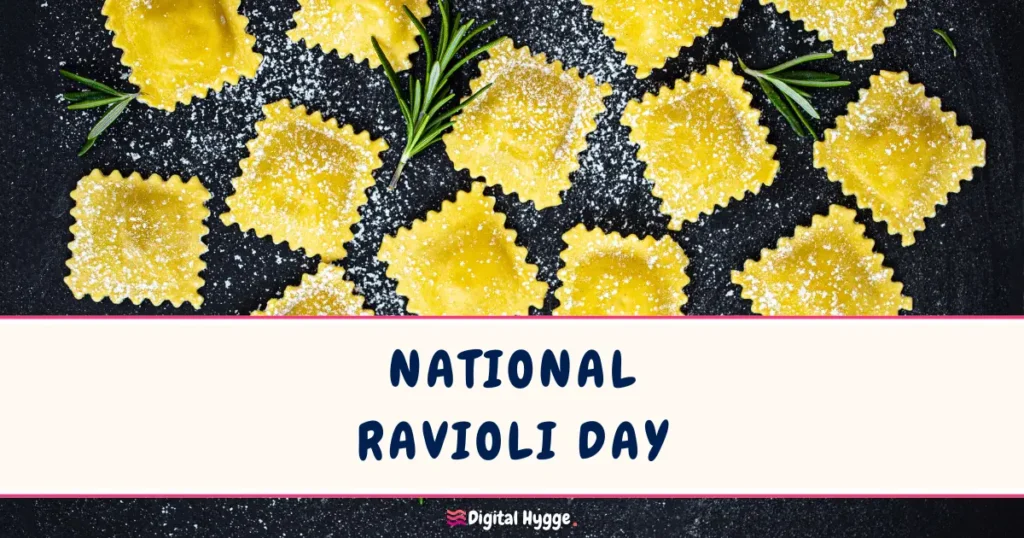

National Ravioli Day is celebrated annually on March 20. The day honors ravioli, the stuffed pasta that has been part of Italian cooking since at least the 14th century. Ravioli belong to a larger family of stuffed Italian pastas that includes tortellini, cappelletti, and agnolotti. What sets ravioli apart is that they are almost always served with a sauce, while their cousins traditionally swim in a broth.
Among pasta-specific holidays, National Ravioli Day ranks as one of the most popular. It typically trails only National Pasta Day on October 17 and National Lasagna Day on July 29 in terms of online search interest and social media activity.
🍝 If you’re a fan of pasta holidays, check out our list of pasta and noodle celebrations we think you’ll love.
The Stuffed Pasta Family
Ravioli are part of a larger tradition of filled pastas from Italy. Here is how the four main types compare.
A Journey From Nobility to the Pantry Shelf
The exact origins of ravioli are debated, but the earliest known mention comes from 14th-century Venice, in the records of merchant Francesco di Marco. By the time ravioli reached Rome in the 16th century, they were paired with tomato sauce and served exclusively at the tables of nobility.
In the 1920s, an Italian immigrant named Ettore Boiardi began canning beef ravioli in the United States under the name Chef Boyardee. A dish that once required a noble title to taste became something any family could pull off a grocery store shelf.
Surprising Facts About Ravioli
Ravioli may be one of the world’s most familiar pastas, but its history is full of unexpected turns that most people never hear about.
How to Participate
- The most popular way to mark the day is simply to eat ravioli, whether at a restaurant, from the freezer aisle, or made fresh at home.
- Many enthusiasts use March 20 as the excuse to skip store-bought options and try making pasta dough from scratch using a ravioli stamp or rolling pin.
- For those who prefer dining out, it is worth checking whether local Italian restaurants are running any specials for the occasion.
- Discover ravioli-inspired dishes from other cultures, such as wontons, pierogi, or empanadas.
- Post photos of your favorite ravioli dishes using hashtags like #NationalRavioliDay or #RavioliLove.
Who Celebrates?
Like many unofficial food holidays, National Ravioli Day does not have a single documented founder or a specific year of origin. It is primarily driven by social media trends and restaurant marketing.
That said, the day draws participation from several corners of the food world:
- Major brands like Chef Boyardee, Rana, and Celentano use it for nationwide promotions and social media campaigns.
- Restaurant chains such as Olive Garden and Maggiano’s Little Italy frequently offer special deals or limited-time fillings like lobster or short rib.
- Some culinary schools, including the Culinary Institute of America, sometimes share educational content or host workshops on pasta-making techniques.